

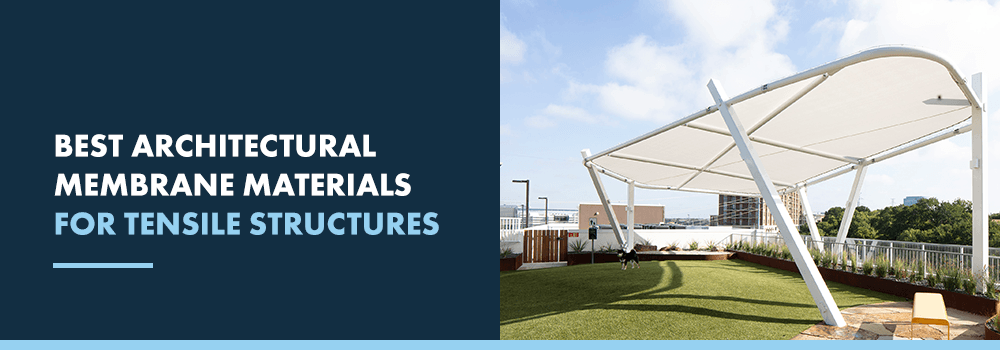
The membrane material specified today will define a structure’s relationship with weather, light and time for years. This decision separates installations that perform gracefully for decades from those requiring costly intervention. For projects that anchor public plazas, define transit experiences or establish campus identity, material selection is an architectural strategy.
Driven by demand for durable, weather-resistant tensile structures, the architectural membrane market is expected to reach $4.63 billion by 2033. Architects, engineers and project decision-makers now have access to a wider range of membrane options than ever before.
Key Takeaways
- The top three architectural membrane materials for fabric structures are PTFE, PVC and HDPE.
- Durability, fire retardancy, light transmittance and waterproofing are the performance benchmarks that separate specification-grade membranes from products that degrade prematurely.
- Climate conditions, wind loads, building code compliance and budget constraints shape the material decision.
- A vertically integrated partner handles material selection, engineering, fabrication and installation as a single coordinated process.
Top Architectural Membrane Materials for Fabric Structures
Each material serves different performance demands, life span targets and budgets.
1. PTFE (Teflon-Coated Fiberglass)
PTFE is considered the premium membrane material choice. Built on a woven fiberglass substrate coated with polytetrafluoroethylene — the same polymer that defines performance in aerospace and industrial extremes — this material is ideal for projects that cannot afford visual degradation or functional compromise over time.
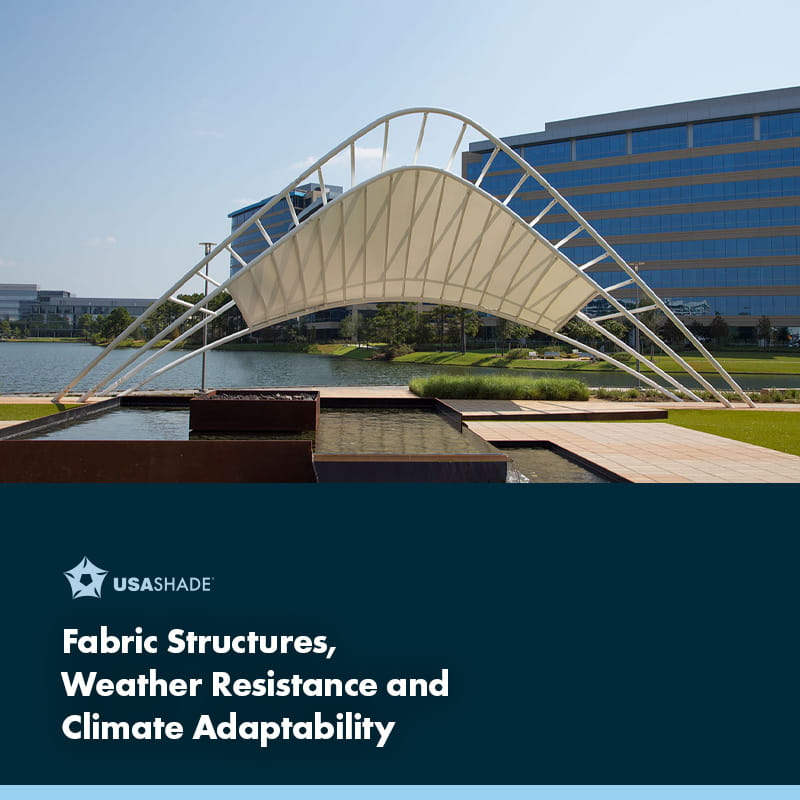
PTFE membranes perform for decades, with life spans often exceeding 30 years. Even in severe climates, UV degradation poses minimal threat to structural integrity or appearance, unlike other membranes that would require replacement. Essentially noncombustible, PTFE meets stringent code requirements for public gathering spaces, stadiums and transportation facilities. Beneath the structure, spaces remain bright without direct glare.
PTFE’s self-cleaning surface sets it apart from alternatives. Because the extremely low-surface-energy coating repels dirt, rain naturally washes away accumulated debris. Throughout its life span, maintenance requirements remain minimal, reducing the total cost of ownership despite the higher initial investment. Stadiums, transit canopies, civic structures and high-profile commercial plazas benefit most from this material when long-term performance justifies the up-front cost.
2. PVC (Vinyl-Coated Polyester)
PVC offers proven versatility across decades of commercial and institutional work. This vinyl-coated polyester fabric delivers color-rich design options and cost-effective value.
Premium-grade PVC often lasts 20 years or more while offering flame-retardant properties that self-extinguish when the ignition source is removed. When specified at architectural grade, PVC delivers impressive strength, tear resistance and durability suitable for structures experiencing regular wind loading and weather exposure.
PVC excels in color availability. Available in a wide range of colors, this material supports bold design options and custom aesthetics that PTFE and HDPE cannot match. When working on projects where modern design vocabulary requires specific color palettes, many architects find PVC’s flexibility essential.
However, compared to PTFE, PVC is more susceptible to UV degradation over time and requires a more consistent maintenance schedule. Plasticizer migration and surface degradation both accelerate under UV exposure. With proper maintenance, premium-grade PVC delivers reliable long-term performance for projects with active facilities management and budget allocation for periodic upkeep.
3. HDPE (High-Density Polyethylene)
For dry-climate installations requiring full water exclusion, HDPE waterproof membrane serves as a durable, cost-competitive option. Engineered as a sealed, waterproof membrane, this petroleum-based thermoplastic polymer differs from open-weave HDPE mesh shade fabric for sun protection alone.
Full rain and sun exclusion make the space beneath usable year-round. In dry-climate installations where UV intensity is high, HDPE performs well. HDPE waterproof membrane is a budget-conscious option for full waterproofing performance where PTFE’s premium investment isn’t necessary.
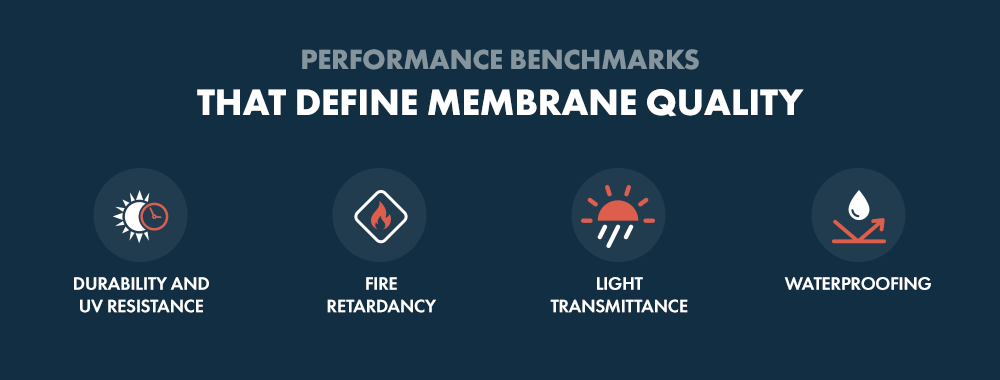
Performance Benchmarks That Define Membrane Quality
To find the best shade structure fabric material, it’s important to understand four core performance benchmarks that define reliable, long-term membrane performance.
1. Durability and UV Resistance
Durability reflects how membranes withstand UV radiation, thermal cycling, moisture and environmental exposure. UV resistance proves most critical.
Because PTFE coating is chemically inert, UV exposure causes no degradation. Appearance and structural properties remain intact for decades. PVC, by contrast, is susceptible to UV-driven degradation. A degradation study confirms that dehydrochlorination and plasticizer migration cause PVC degradation, with heat and UV exposure accelerating both processes. Over time, UV degradation of PVC can lead to membrane rupture, wrinkling and welding failures.
When materials degrade under UV, earlier replacement and more frequent maintenance become necessary, raising total cost of ownership. Structures that meet durability standards perform as specified across their life span.
2. Fire Retardancy
Fire performance shapes permit approval as much as it protects occupants. For public gathering spaces, stadiums, transportation hubs and commercial venues, material fire classification determines whether a project advances from design to construction. Building officials require documented performance before releasing permits, making this a front-end specification criterion.
PTFE is noncombustible — it does not sustain flame or produce flaming droplets. PVC is flame-retardant and self-extinguishes once the ignition source is removed. Both materials meet stringent requirements, though their classifications differ in technical testing. Consult fire retardancy requirements to understand how material choice affects permitting.
3. Light Transmittance
Light transmittance — how much natural light passes through the membrane — affects both the space’s functionality and aesthetic. Translucency creates both daylighting benefits and distinctive visual character at night when lighting produces a backlit luminosity effect.
PTFE offers translucency that diffuses natural daylight, creating bright spaces beneath the structure without direct glare. For applications where teams prefer complete sun blocking, opaque options provide full shade. Light behavior should be a design specification rather than an afterthought.
4. Waterproofing
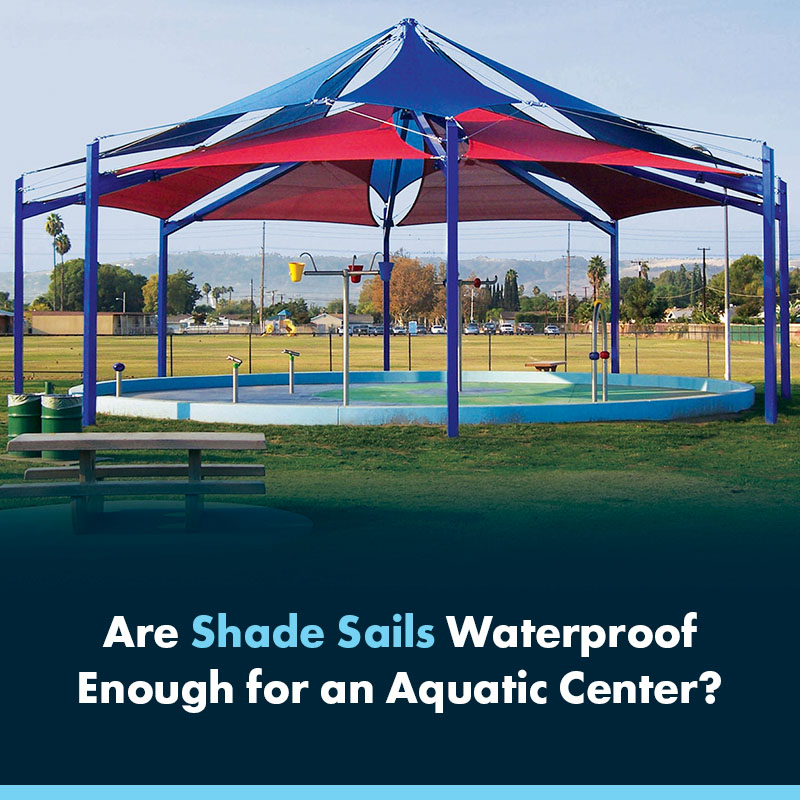
A sealed architectural membrane provides complete weather exclusion, making the space beneath usable year-round and preventing structural degradation. With proper installation, all three primary membrane materials are fully waterproof. Review waterproofing capabilities to understand how material choice supports all-weather usability.
Key Factors to Consider When Choosing a Membrane Material
The material decision involves balancing multiple real-world constraints. Performance requirements, site conditions, budget and code compliance don’t always point to the same answer:
- Budget and life span: PTFE costs more up front but delivers a longer life span with lower maintenance overhead. PVC is the more accessible entry point but requires eventual replacement. HDPE provides competitive full-waterproofing performance in appropriate climates. The lowest initial cost rarely translates to the lowest total cost of ownership.
- Climate and UV exposure: Geographic climate significantly influences which membrane material will perform best. High-UV or harsh-climate environments favor PTFE’s UV-inert properties. Dry climates with full waterproofing requirements are well-suited to HDPE.
- Wind loads and structural requirements: The membrane material’s weight, strength and structural behavior under wind loading all feed into the engineering specifications for the supporting structure. Consult fabric structure engineering considerations to understand how material choice affects structural design.
- Building codes and regulations: Specific code requirements govern fabric membrane structures, and material fire classification directly affects whether a structure can receive permits. Architects need to confirm their chosen material meets applicable building codes and load standards and satisfies the minimum requirements for fabric membrane structures before specifying.
- Aesthetics and maintenance: Function and form carry equal weight. PVC offers the widest color range with bold custom color options. PTFE’s self-cleaning surface reduces maintenance intervals and retains a crisp appearance. HDPE delivers durable performance in appropriate climates with a competitive maintenance profile.
Start Your Project With USA SHADE
When the right material choice can determine a structure’s performance for decades, the decision deserves more than guesswork. USA SHADE is a proven leader in fabric structure design and technology. We are a fully vertically integrated company, so your business gets a single expert partner through material selection, engineering, fabrication and installation.
Whether the project calls for PTFE’s premium durability or a cost-effective PVC installation, our team handles every phase of the process. Explore USA SHADE’s architectural membranes or browse custom fabric membrane structures to see what’s possible.