

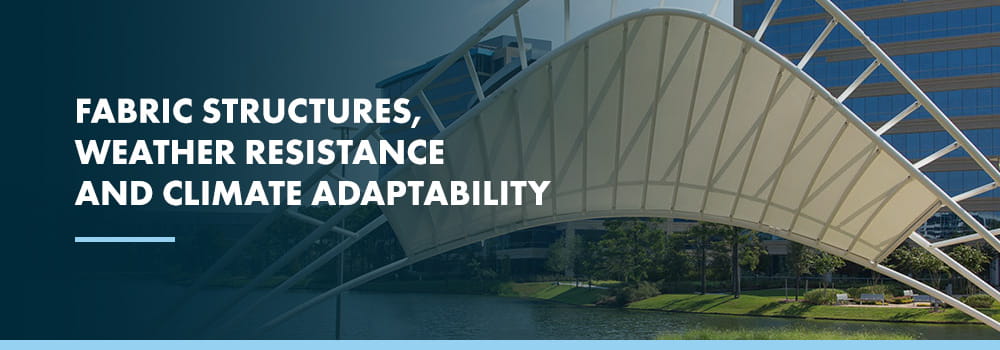
Architects and engineers deal with the persistent challenge of creating visually striking constructions that can withstand extreme weather conditions. From relentless sun in arid climates to heavy snow loads in northern regions, the environment demands solutions that don’t compromise on form or function.
Membrane structures combine advanced materials with sophisticated structural design to deliver weather resistance across diverse conditions. Whether your business is designing a transit hub in a hurricane zone or an outdoor venue in the desert, understanding the engineering principles and material performance behind these structures is essential for confident specification.
How Do Shade Structures Provide Weather Protection?
Shade structures deliver effective weather protection through a combination of purpose-built materials and sophisticated engineering that accounts for environmental loads. Their effectiveness stems from precision in both material selection and structural calculation, not from brute mass or thickness.
Fabric structures provide shade for parking areas across climates ranging from the intense heat of the Middle East to the cold of Scandinavia, and they protect buildings from heavy snowfall accumulation. In the United States, these structures perform in hot and arid regions, humid coastal environments and areas subject to snow and freezing temperatures.
How Do Fabric Shade Structures Perform in Harsh Climates?
Performance in extreme conditions depends on matching structural design principles to the specific challenges of each environment. Engineers, architects and designers collaborate to create clever structures that are beautiful and resilient to an area’s unique climate and weather patterns.
Wind
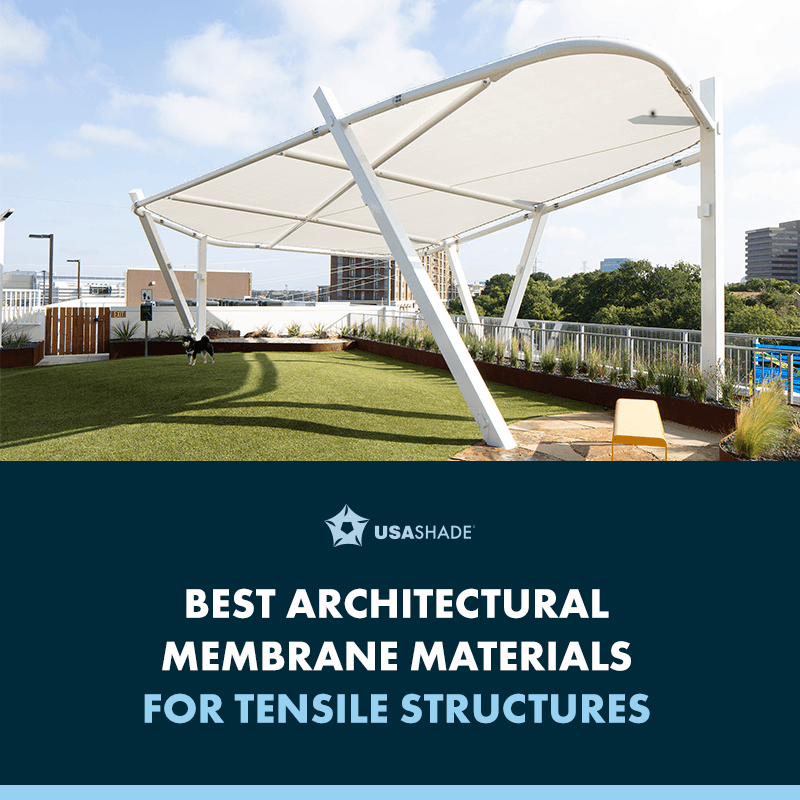
Wind resistance begins with aerodynamic geometry. Curved and streamlined shapes allow wind to flow smoothly over and around the membrane surface, minimizing drag and preventing the buildup of excessive pressure that can compromise more rigid structural systems.
Site-specific analysis is essential. Hills, valleys, shorelines and urban landscapes with varying building heights can accelerate, decelerate or redirect wind flow, creating localized effects that general wind maps cannot capture. Standards like ASCE 7 provide the framework for calculating wind loads with site-specific factors, including terrain exposure and topographic features, ensuring the structure meets the real-world conditions it will encounter.
Rain
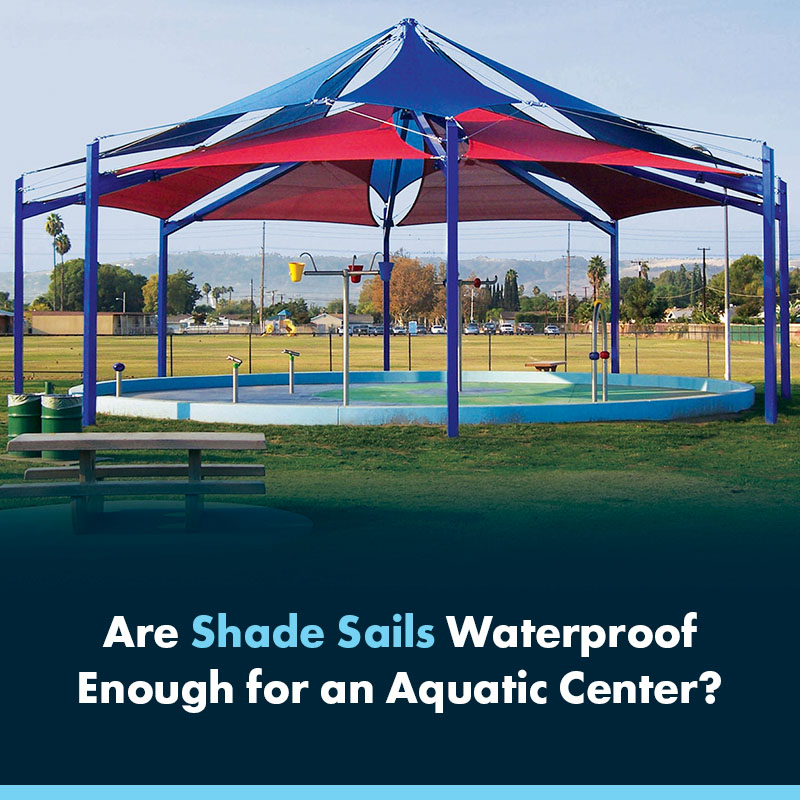
Manufacturers fabricate membrane structures from waterproof materials such as PVC-coated polyester or PTFE-coated fiberglass. Long-term exposure to moisture poses no threat to these purpose-built fabrics.
Structural geometry reinforces material capability. Engineers pull the membrane taut and anchor it to rigid frames, creating curved or sloped surfaces that promote rapid water runoff and prevent ponding that could add weight and stress the system.
Heat and Sun Control
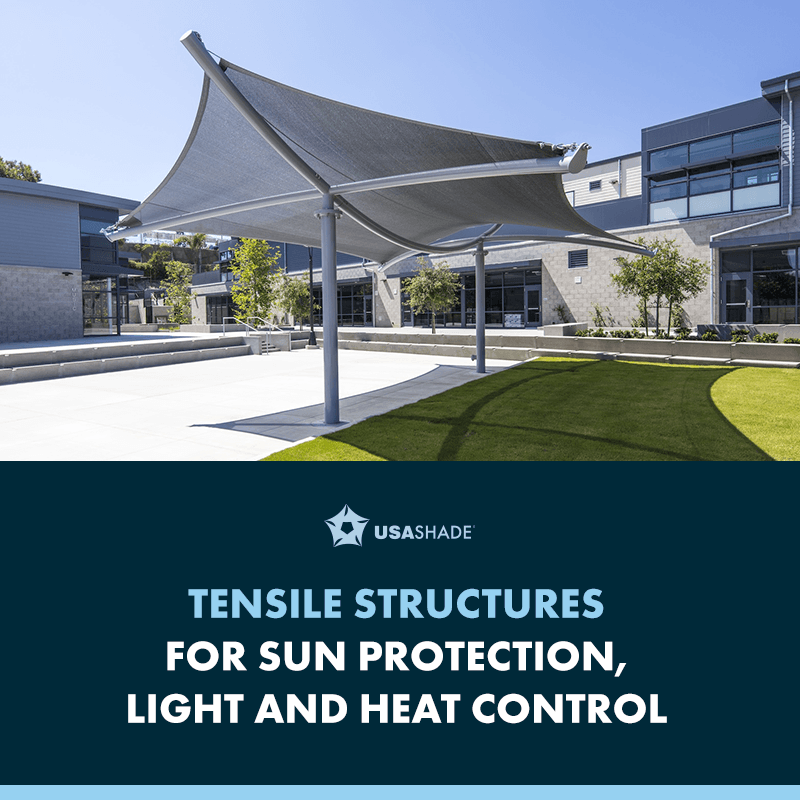
Engineers select membrane materials for their ability to reflect sunlight, which maintains cooler temperatures beneath the canopy compared to traditional concrete or metal roofing. Lower ambient temperatures reduce the urban heat island effect and improve thermal comfort in shaded areas.
Many fabrics also block harmful ultraviolet radiation, a critical consideration for comfort and health. When specifying materials, review the ultraviolet protection factor to ensure adequate protection for the intended use.
Snow and Ice
Accumulated snow creates a heavy load. Many fabric roof systems address this by using steeply angled or curved geometry that encourages snow to slide off naturally under gravity, reducing the duration and magnitude of snow load on the structure.
Despite their lightweight appearance, supporting frames and tensioned membranes can carry specified snow and ice loads. Engineers design these systems to meet standards such as ISO 4355:2013, which establishes the basis for calculating these environmental actions on structures.
Insulation
Architects often use multilayered membrane systems to achieve optimal thermal efficiency. Inflated layers form cushions that trap air, creating an insulating barrier comparable to double-pane glazing. This design boosts thermal control while maintaining the translucency typical of fabric structures.
Natural Light and Glare Control
Fabric structures offer a distinct advantage in managing daylight. Natural light filters through the membrane, creating soft, diffused and uniform lighting beneath the structure.
The inherent flexibility in these structures enables architects to sculpt roof forms and orient the design to optimize daylight penetration while minimizing direct sun exposure during peak glare periods. Material selection and surface geometry work together to balance lighting and visual comfort.
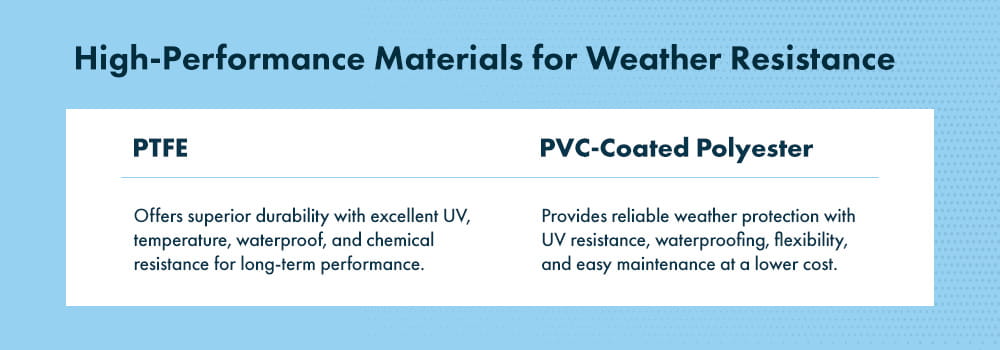
Common High-Performance Materials for Weather Resistance
Materials for shading structures must withstand years of rain, wind and sun. Engineers and designers commonly work with PTFE-coated fiberglass and PVC-coated polyester fabric to design dynamic, climate-resistant structures.
PTFE
PTFE-coated fiberglass ranks among the most durable membrane materials available for fabric architecture. Its weather-resistant properties include the following.
- UV resistance: PTFE maintains structural integrity, color stability and reliable function over decades, even in regions with intense solar radiation.
- Temperature resistance: The material withstands extreme high and low temperatures without degrading or losing flexibility, preventing cracking or brittleness.
- Smooth surface: The highly smooth, low-friction surface of PTFE prevents the adhesion of dirt, dust, pollutants and organic growth such as mold and mildew.
- Waterproof capability: The PTFE coating renders the fiberglass fabric fully waterproof, effectively preventing water penetration during rain or snow events.
- Chemical inertness: PTFE does not react with most chemicals, pollutants or environmental contaminants. Its chemical inertness allows it to resist staining, corrosion and breakdown from industrial fumes, acid rain or atmospheric pollutants.
PVC-Coated Polyester
Engineers and architects use PVC-coated polyester fabric in various applications. This fabric balances reliable function, versatility and cost-effectiveness. Its primary weather-resistant properties include the following.
- Waterproofing: The PVC coating effectively sheds rain and snow, keeping the underlying surface dry.
- UV resistance: Manufacturers formulate modern PVC fabrics with UV stabilizers that protect against degradation from sun exposure, maintaining fabric strength and color over time.
- Flexibility and formability: PVC offers high flexibility, allowing fabricators to mold it into the complex, flowing shapes characteristic of fabric architecture.
- Resistance to mold, mildew and dirt: The PVC coating creates a relatively smooth surface that resists biological growth and simplifies maintenance.
The Importance of Maintenance
A well-maintained fabric structure can deliver decades of reliable performance. Routine attention protects the initial investment and sustains long-term function and appearance.
While engineers design shading structures to be low-maintenance, a regular inspection schedule ensures maximum design life and continued structural integrity. Check fabric for small tears, which can propagate if left unaddressed. Inspect, clean and adjust frames, cables and connections to maintain proper tension and alignment.
Partner With USA SHADE for Your Project
When your business needs a shade structure that performs in any climate, USA SHADE delivers turnkey solutions from concept to installation. As a DSA-certified manufacturer with in-house design, engineering and fabrication capabilities, USA SHADE partners with architects and engineers to create custom weather-resistant shade structures built to meet specific project demands.
Through our Architectural Studio, we provide dedicated design collaboration, 3D modeling and engineering support. Find out more about our comprehensive services and discover custom shade structure solutions designed for high-pressure environments. Contact USA SHADE to bring weather-resilient design to your next project.