

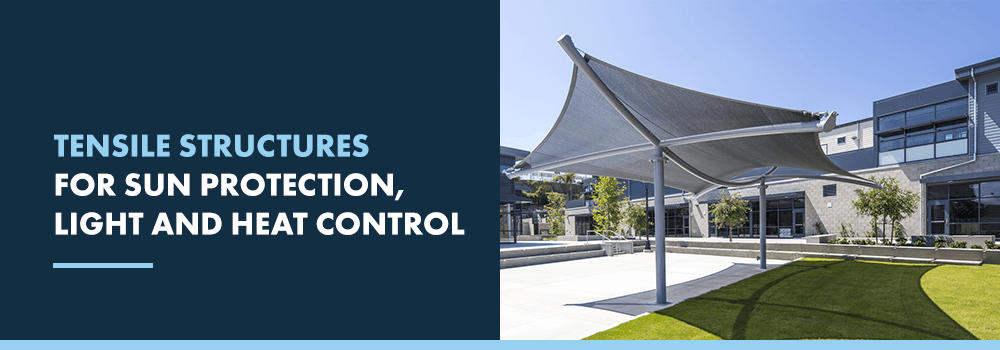
Tensile structures make outdoor spaces more comfortable and usable in peak sun, helping visitors enjoy your organization’s facility even during the day’s brightest sunlight hours. Whether your business manages outdoor spaces or designs and architects projects, adding tensile structures to plans can make a significant difference.
What Are Tensile Structures?
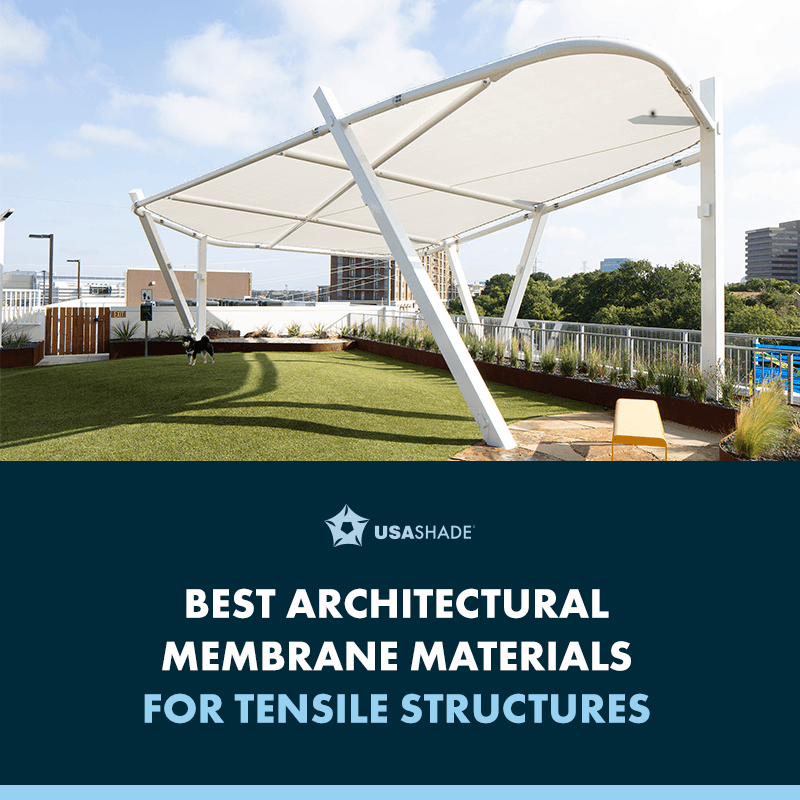
Tensile structures are outdoor shade solutions that feature high-strength, flexible fabric membranes. These membranes stretch tight between structural supports such as steel cables or columns, relying on tension rather than rigid roofs. Their unique construction makes tensile structures more lightweight and gives them more sweeping, geometric shapes.
Redefining Outdoor Spaces
Custom tensile shade structures redefine outdoor spaces in the following ways:
- Providing significant shade without taking up too much space: Since tensile structures span large areas without interior supports, your business can install them without reducing usable space.
- Enabling precise control: A shade structure’s flexibility enables precise control over sun, heat, light and glare. Your business can select material, shape and location for optimal shade based on the sun’s path.
- Elevating outdoor space aesthetics: Tensile structure designs feature sprawling, organic curves that enhance an outdoor space’s aesthetics. Rather than a traditional, boxy structure, your business can add dramatic, fluid silhouettes that serve as eye-catching focal points and enhance your facility’s branding.
Blocking UV Rays
Tensile shade structures reduce UV exposure, helping visitors avoid harmful rays and use your facility comfortably.
A tensile shade structure’s fabric is coated with specialized UV stabilizers that block significant amounts of UV rays. This advantage makes your business’s spaces more appealing to individuals who aim to protect themselves from the sun.
High-performance fabrics, such as the following, block UV rays:
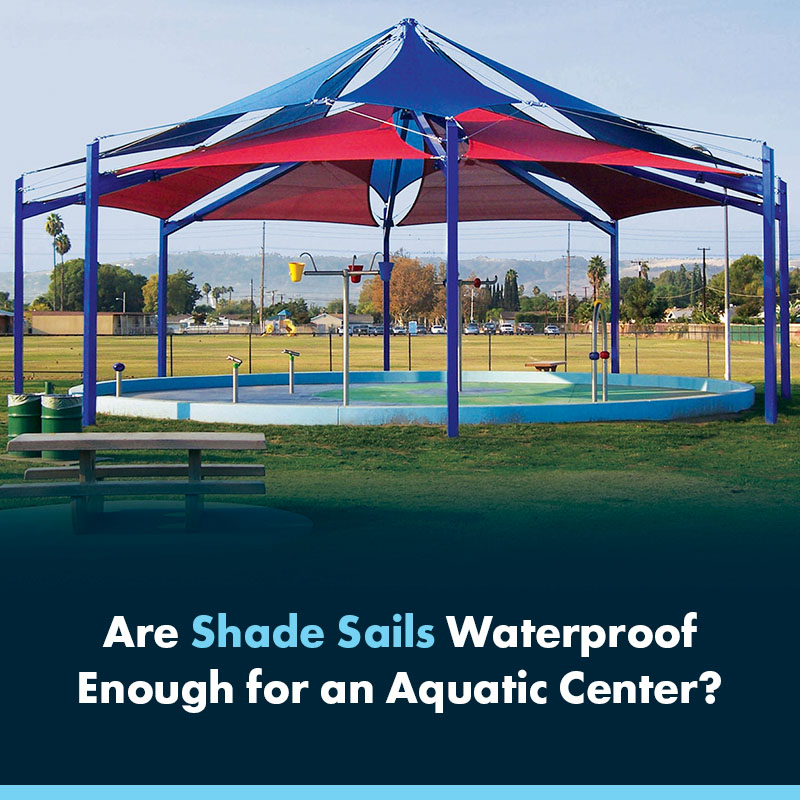
- Sealed, waterproof fabric: Tensile membrane is a sealed, waterproof fabric that blocks UV rays and rain for permanent architectural structures.
- Knitted high-density polyethylene (HDPE) mesh: HDPE mesh is an open-weave, breathable fabric that filters heat and UV rays while allowing light rain and air to pass through.
Balancing Brightness and Illumination
Tensile fabrics transform sunlight into a soft, even glow, creating comfortable visual environments. A tensile shade structure is more translucent than solid concrete or metal structures, reflecting direct light and allowing some light to pass through. This balance creates brightness without the intensity of unfiltered sun. Tensile structures allow plenty of natural light while blocking UV rays, making it easier to design spaces that feel open and well-lit without compromising comfort.
Tensile structures reduce glare by scattering and diffusing incoming light. They soften the light before it reaches the space below, which prevents harsh light bounce, perfect for sports courts, outdoor dining, workspaces and anywhere screens or visual tasks are involved.
Keeping Areas Cool
Fabric shade structures can help reduce ambient temperatures underneath, with the following heat control benefits:
- Open-weave fabric allows air to circulate freely below the canopy rather than trapping heat.
- Reflective membrane materials bounce solar energy away from the structure and adjacent buildings.
- A reduced solar load on adjacent structures contributes to passive cooling and lower HVAC system demand, helping your business lower energy consumption and costs.
- Air circulation beneath shade structures also contributes to energy efficiency in adjacent buildings.
These heat control elements make outdoor spaces more comfortable. Whether your organization provides outdoor areas for schools, community spaces or sports facilities, fabric shade structures help individuals enjoy your organization’s facilities for longer hours.
What Are the Best Applications for Shade Structures?
Your business or organization can use shade structures for various applications:
- School playgrounds
- Parks and recreational facilities
- Outdoor seating at restaurants and hospitality areas
- Pools and waterparks
- Outdoor sports courts
- Spectator areas
- Transit areas such as bus stops
- Outdoor retail and commercial spaces
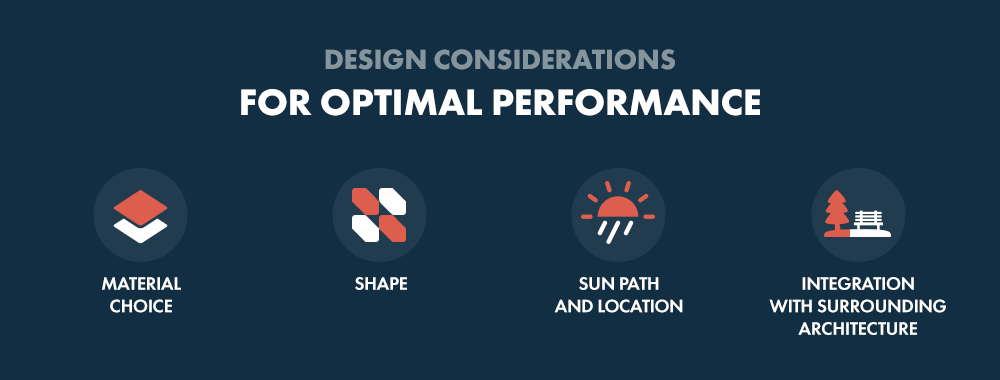
Design Considerations for Optimal Performance
Selecting the right combination of materials, geometry and site placement ensures optimal sun protection and performance.
Material Choice
Material selection is important for the level of protection you need.
HDPE mesh is breathable and blocks UV while maintaining airflow. Air and moisture pass through, heat vents upward and the space below stays cooler. HDPE is best suited for parks, playgrounds, athletic facilities, schools and commercial outdoor areas where ventilation is a priority.
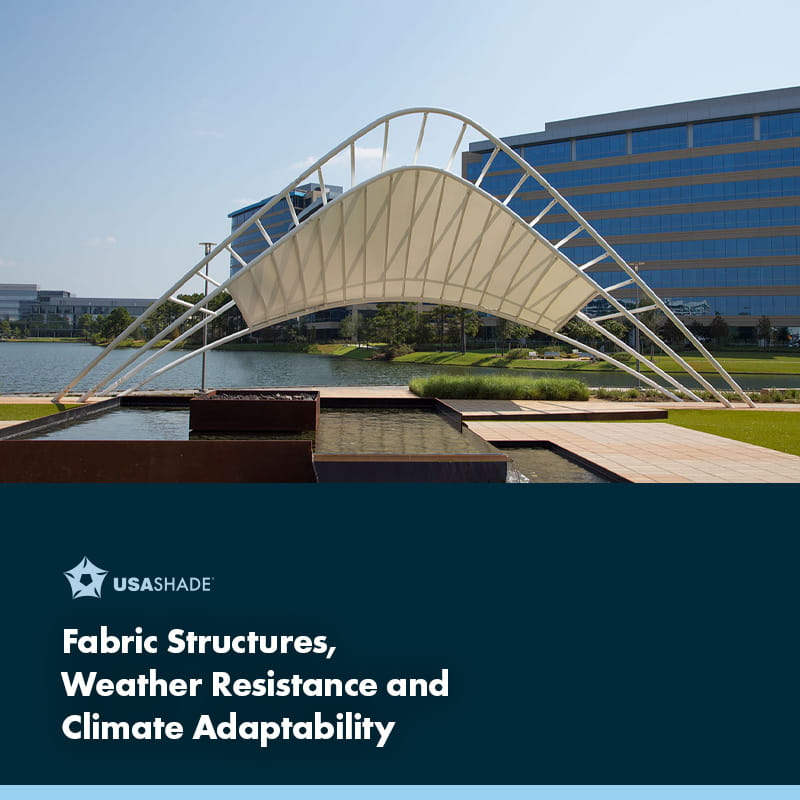
Membrane tensile structures are sealed, coated textiles, often waterproof and weather-blocking. They carry structural load and span large clear distances. Membrane is the best material choice for permanent architectural structures, transit canopies, stadiums and commercial plazas.
Shape
Curvature, pitch and canopy angle impact how much a tensile shade structure blocks the sun at different times of the day. A tensile structure’s geometry creates complex shade patterns that shift and adjust throughout the day, often covering more usable area than a flat rigid canopy of the same footprint.
A flat, horizontal canopy provides consistent shade directly beneath it but leaves the edges of the space exposed to low-angle morning and afternoon sun. Angled or pitched canopies can be oriented to intercept light at specific angles, extending effective shade coverage during the hours when the sun is lower in the sky. A curved canopy edge also deflects wind more gracefully than a flat panel, contributing to the structure’s comfort and durability.
A steeper pitch is more effective against high-angle midday sun, while a shallower, angled canopy may better block low-angle late-afternoon glare.
Sun Path and Location
Where a structure sits on a site and how it’s oriented relative to the sun’s daily and seasonal arc determines its effectiveness.
Morning sun rises from the east at a low angle and tends to be cooler. Afternoon sun from the west is lower in the sky and more intense. A structure that performs well at noon may leave a space exposed during peak late-afternoon hours if the orientation isn’t considered.
Before choosing a structure, assess where direct sun hits the space during peak use hours, account for seasonal variation and consider using sun path analysis tools to model coverage throughout the year.
Integration With Surrounding Architecture
Your business can choose shade structure colors and shapes that match your brand. Tensile structures are available in a wide range of fabric colors, steel finishes and powder-coat options. They also come in specific shapes, such as a sail, hip, pyramid or membrane canopy, to complement or deliberately contrast with the surrounding built environment.
Enhance Shade, Natural Light and Heat Control With USA SHADE
Tensile structures offer a uniquely effective approach to managing sun, heat, light and glare, transforming uncomfortable outdoor spaces into inviting, high-performing environments for your organization’s visitors and clients.
USA SHADE offers high-quality tensile structures for sun protection, light and heat control. Our expert team customizes shade structures with in-house design, engineering, fabrication and installation capabilities. With over 25 years of experience in fabric structure design and technology, we deliver the comprehensive resources that lead to successful projects and lasting partnerships.
Request a quote to start a project and transform your company’s outdoor spaces.