

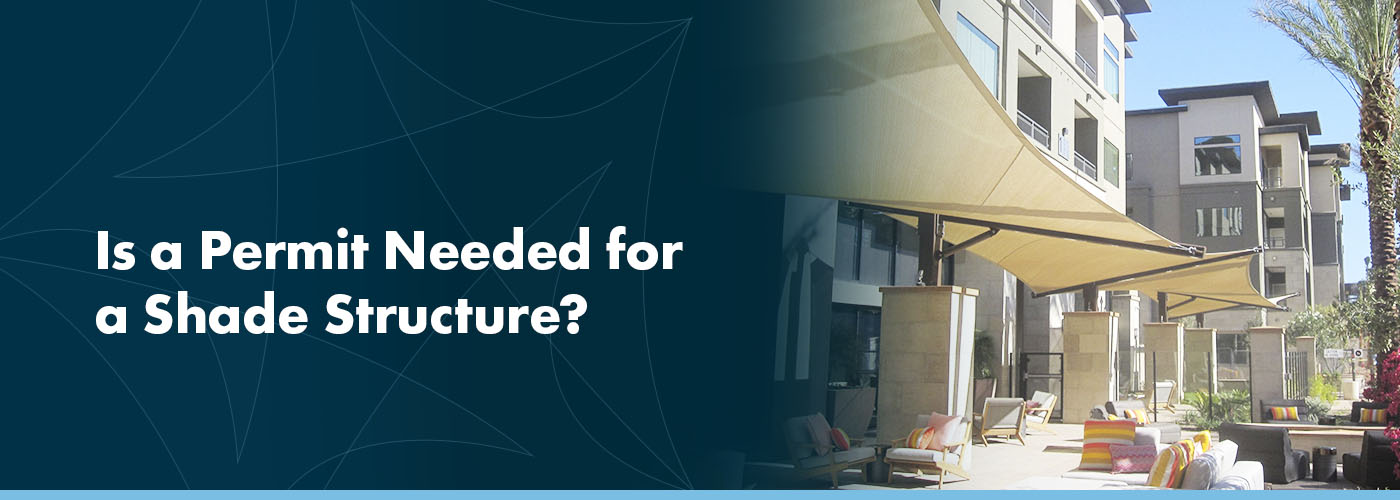
Shade structures can be a thoughtful addition to your business, offering comfort for customers and employees while enhancing your outdoor space. But building one isn’t always straightforward. Beyond your unique design and functional needs, you’ll also need to follow local building codes and zoning laws. Overlooking these requirements can result in costly fines or legal complications.
What Are Shade Structure Permits?
Property owners must obtain written legal permission from local governing bodies before constructing a shade structure. This clearance comes in three forms:
- Building permits give you the green light to build on your property.
- Zoning approvals confirm that the shade structure doesn’t violate the bounds of your property.
- Special-use permits enable you to use the structure uniquely.
Most local building codes derive from the International Building Code. They protect private property and ensure all structures can handle environmental conditions such as wind, rain and snow.
Do I Need a Permit for a Shade Structure?
To answer that question, determine whether the shade is temporary or permanent. Portable, compact canopies and tents typically do not require permits, whereas shade structures almost always do. These sizeable, permanent additions can violate square footage and load profile standards. Misplaced shade structures might also impede sidewalks and fire lanes.
Shade Structures That Typically Require Permits
Before adding a shade structure, proactively research which types require permits in your area.
- Cantilevers: Cantilevered structures have support columns all mounted on one side. They must distribute the entire structure’s weight from that position and handle wind uplift without collapsing. The permit process ensures they can do both.
- Multipost structures: These generously sized structures can cover vast groups of people. They must be structurally sound and unobstructive, or people could get hurt.
- Shade sails: Tensioned sails place significant pressure on the anchor points that support them. The permit process ensures these anchor points are strong enough to handle the load, even under high wind conditions.
- Custom shade structures: New designs need a professional inspection to make sure they are safe and compliant with local building codes. Otherwise, there’s no way to know if they can handle the weight or weather.
Regional and Jurisdictional Shade Structure Regulations
Building code regulations and zoning laws can vary drastically from region to region. For example, some Florida counties have designated high-velocity hurricane zones with some of the world’s strictest wind load requirements. By contrast, many states in the Northeast U.S. have stringent snow load requirements, while California and other earthquake-prone states often have guidelines designed to help structures survive seismic activity.
Contact your appropriate local government department before building anything and ask what you must do to adhere to all applicable codes and zoning guidelines.
How to Learn if a Shade Structure Needs a Permit
Follow these steps to determine whether you must obtain permits before starting your project.
- Gather critical project documents: Start by preparing a package that contains all relevant project documentation, including a site plan showing property lines and preliminary drawings that illustrate the structure’s dimensions.
- Identify the authority having jurisdiction: The AHJ is the local organization responsible for enforcing the building code. Typically, this is your city’s building department or county’s office of planning and development.
- Thoroughly review the AHJ’s website: Familiarize yourself with the AHJ’s standards. Look for sections labeled “permits,” “inspections” or “development services.” The site may also have documents or FAQs dedicated to “accessory structures” or “canopies.”
- Make a call or visit: With the project details in hand and the website review complete, clarify points of confusion. Ask about setback requirements and wind and snow load ratings. Confirm what documents you need to submit a permit application. The answers will help your business move the project forward safely.
The Permit Application Process
Typically, a permit application involves four stages.
- The application: First, you will need to fill out the application form and attach the necessary documentation. Typically, this includes project specs and professionally engineered, stamped drawings. Most AHJs allow businesses to submit applications online.
- The review: Next, a plan examiner will review your application to ensure it complies with all relevant codes. They will flag violations and suggest ways your business can correct them.
- The payment: Your business must pay a permit fee based on the project’s valuation to cover the cost of the review and subsequent inspections.
- The inspection: This final stage is typically the longest and most thorough. The inspector will evaluate the construction footing and framing to ensure they align with the application. After project completion, they’ll do one final walk-through to confirm that everything is in order.
The Consequences of Building Without a Permit
Building a shade structure without a permit can create serious problems for your business. Inspectors may issue an order that halts construction mid‑project, and you could face steep fines for every day the work violates local standards. In some cases, authorities may even order you to tear down the structure.
Completing the project without obtaining official approval doesn’t eliminate the risk. An unpermitted structure is more likely to fail, which can cause injuries or extensive property damage. If that happens, your insurance carrier may deny coverage, leaving you responsible for paying the entire amount out of pocket.
Unpermitted construction can also complicate future property sales. Many buyers see unauthorized structures as a red flag and may walk away from the transaction.
Tips for a Smooth Permit Process
The permit process can be long and arduous. Here’s what you can do to pave the way.
- Integrate permitting into the project timeline: Permitting can’t be an afterthought. Reviews and inspections take time, so plan for them from the start.
- Invest in professional, stamped plans: State-licensed engineers can significantly speed the review by creating clear, complete and accurate drawings for the permit application.
- Maintain proactive communication: The sooner your business responds to requests from the plan examiner, the quicker you can expect to receive your permit.
- Partner with an experienced manufacturer: A company that specializes in designing permanent shade structures can simplify your experience by providing insider knowledge and helping you acquire the necessary documentation.
Frequently Asked Questions
Here are some of the most commonly asked questions about shade structure permits.
1. Do I Need a New Permit to Repair a Damaged Shade Structure?
Minor cosmetic repairs, such as fabric patches, do not require a permit. Larger structural repairs, such as replacing a damaged column, almost always do.
Contact your area’s AHJ to ask if you need a permit for your structure’s specific repairs.
2. How Long Does the Permit Process Take?
That depends on the project complexity and how busy your area’s AHJ is. You might have your permit in a few weeks if you plan to build a simple, pre-engineered shade structure. A large, custom structure could take months, especially if your business is in a major city.
3. What Permits Are Required for Architectural Membrane Installation?
Depending on your location, the following permits may be required for architectural membrane installation:
- Building permit: A building permit is necessary for almost all semi-permanent and permanent structures. Your company must submit foundation details, site plans and structural calculations to demonstrate that the shade structure and architectural membrane can withstand local snow and wind loads.
- Land use permit or zoning approval: A land use permit ensures your company’s architectural membrane doesn’t violate height limits, setback distances or maximum impervious surface ratios on your company’s property.
- Fire code permits: Your company may need to submit a flame retardancy certificate that proves your architectural membrane installation meets fire and safety codes. An operational and construction permit may also be required if your company’s shade structure exceeds a certain size.
- Special use permit: A special use permit may be necessary if a developer installs a shade structure in a protected zone, designated historic district or an area that changes the footprint of a commercial business.
USA SHADE helps ensure your company’s architectural membrane meets compliance, making it easier to obtain the permits and approvals you need.
4. What Happens if My Permit Application Is Denied?
If your permit application for a shade structure is denied, you receive a written notice with details about the project’s precise zoning issues or code violations. Your company must pause any current construction upon receiving this notice and take one of the following actions:
- Apply for a zoning variance
- Modify plans to meet compliance
- Formally appeal the application denial
5. Are There Different Types of Permits for Different Shade Structure Materials?
No, different shade structure materials do not require different permits. The permits your company needs depend on a shade structure’s location, size and permanence. Metal pavilions and fabric sails may require different structural evaluations to obtain certain permits, but the same core permit categories typically apply to all shade structures.
6. What if My Company Wants to Modify or Expand My Permitted Shade Structure Later?
If your company wants to modify or expand your permitted shade structure later, a new zoning/building permit or permit amendment is required. It’s essential for any structural expansions to comply with height limits, surface coverage limits and local setbacks.
Partner With USA SHADE for All Your Shade Structure Needs
USA SHADE has worked with businesses of all kinds for over 30 years. We have the expertise to design and create beautiful shade structures that adhere to all local building codes. Look at how many clients we’ve helped already!
Request a quote today or reach out at 855-693-0011.