

The popularity of pickleball has soared in recent years, with player counts increasing by 223.5% in only a few years. Many players are picking up the paddle and giving the sport a try for the first time. For savvy entrepreneurs, starting a pickleball business is a great way to capitalize on the sport’s excitement.
If you’re interested in creating and managing pickleball courts, explore our guide to starting a pickleball business. Below, we show you how to invest in pickleball by examining everything from the dimensions of the court to the business plan that can turn that court into a community hub.
Conducting Local Market Research
Before investing in the infrastructure needed to support a pickleball court, it’s important to assess your area’s needs and demographics. Both can impact your small business’s performance. If there aren’t enough people in your area who are interested in pickleball, for example, starting a business based on it may not be financially advisable.
To get a sense of your local market and how a pickleball business might perform, you should:
- Assess the existing number of pickleball courts in your area and their quality to identify service gaps.
- Evaluate the number of active pickleball players in your community to identify demand.
- Find local organizations that could partner with and promote your business.
- Identify potential sites for construction or renovation that could accommodate new courts, either indoors or outdoors.
- Assess community pickleball trends, such as peak seasons, player demographics and how competitive the community is.
Some of the best methods for conducting market research include using local business directories, attending community events and putting out informal surveys. Once you’ve gained insights into the local pickleball community and how it’s being served, you’ll be better equipped to make effective business decisions and improve your return on investment (ROI).
Creating a Pickleball Business Plan
Now that you’ve completed your local market research, you can begin building a pickleball business plan. The specifics should be tailored to your community and resources, but your plan will generally include:
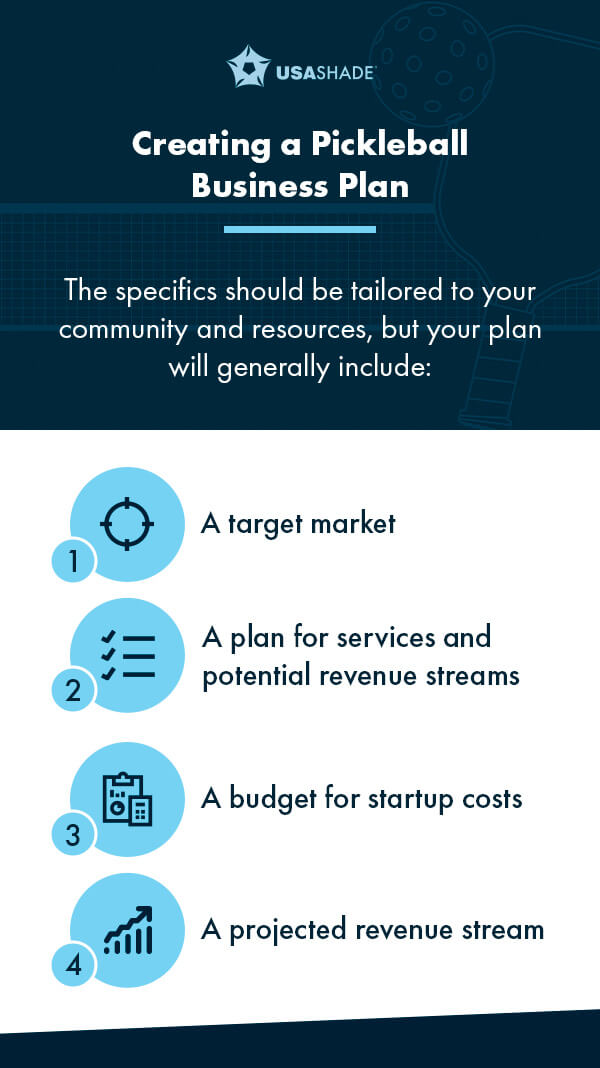
- A target market: Identify the specific groups you want to reach so you can create advertising that will appeal to that target demographic. A narrow, specific focus can help you develop an active pickleball community at your courts more quickly. If your local community is mostly retirees, for example, you’ll want to find the best way to market to them specifically.
- A plan for services and potential revenue streams: Before opening your doors, have a plan for the services and amenities your pickleball business will offer. These offerings can include court reservations and rentals, gear sales and rentals, food sales, tournament hosting, and merchandising themed around your business. A progressive rollout can support your business’s growth.
- A budget for startup costs: Perhaps the most important aspect of your business plan is the budget. Before taking any action, assess your resources and determine how far they can go while minimizing financial risk. This will help you determine what to prioritize when planning and setting up the pickleball courts, amenities and other potential revenue streams. Consider the cost of land, construction, equipment, insurance and more.
- A projected revenue stream: During the planning stage, evaluate the projected revenue generated by court rentals, memberships, merchandise sales and your business’s other offerings. Consider different pricing strategies and how seasonal demand might affect things. This knowledge can help you adjust your business plan to optimize ROI and avoid overextending.
Choosing the Right Location and Facility Type
In business, few things are as important as location. It affects your facility’s accessibility, visibility, taxes, parking, zoning and more. The location you choose may also change the regulations and permits required for your business. These factors can directly affect your business’s performance and its ability to cultivate an active pickleball community.
You’ll also need to consider whether your pickleball facility will be indoors or outdoors. Either choice may be better suited for your community or budget than the other. The facility type you choose to invest in will also change the location options that are available to you.
Indoor Courts
Indoor courts tend to be more expensive as they require you to construct or purchase a facility. However, indoor facilities also allow you to host games, practices and tournaments without worrying about the weather. They may also make it easier for you to install amenities and upgrade your services. Rooms can be repurposed or remodeled to accommodate new offerings, such as merchandise, equipment rentals and vending machines.
Outdoor Courts
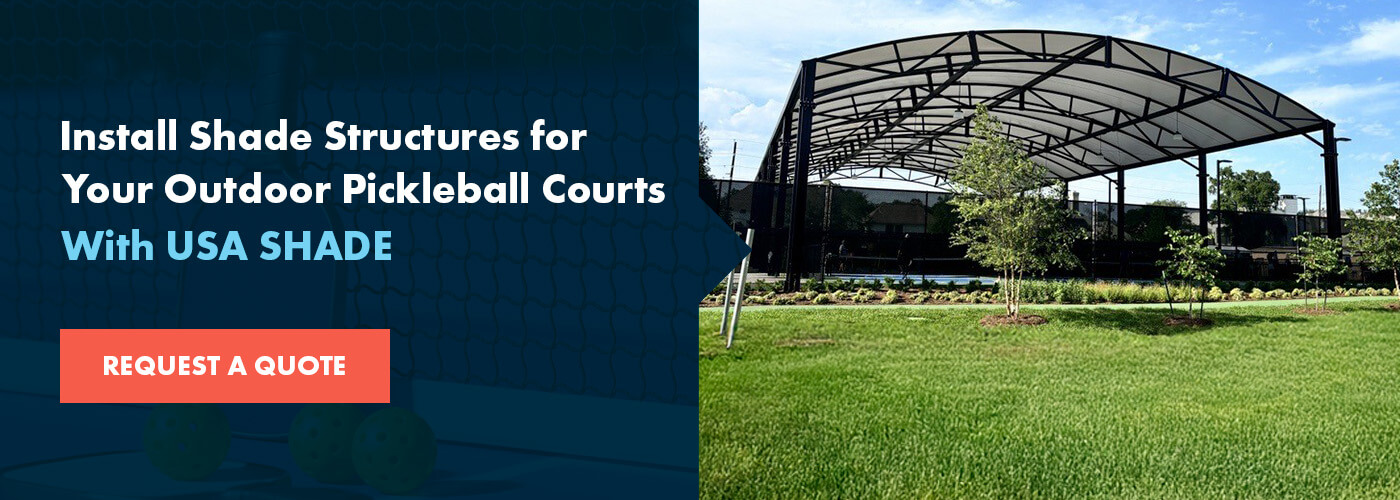
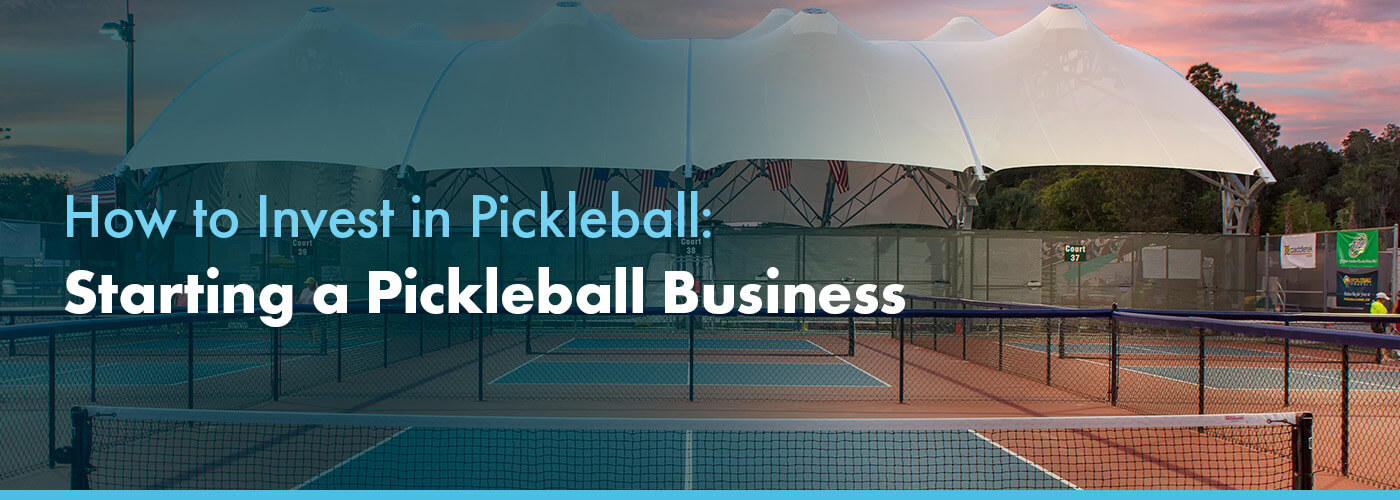
Outdoor courts tend to be cheaper to construct and maintain since they don’t need to be housed in an expansive facility. They’re more exposed to the weather, but you can keep them dry and comfortable by investing in shade structures. Shade structures can protect players and courts from rain and extreme temperatures. Outdoor courts also tend to be more visible to the public, making them both more inviting and accessible.
Standard Pickleball Court Design
As defined by USA Pickleball, the standard pickleball court size is 20 feet wide and 44 feet long. However, the full area of play should be at least 30 feet wide and 60 feet long to give players space to move as needed. The court itself is typically made of asphalt or concrete, coated with an acrylic coating to protect the surface and ensure the pickleball bounces consistently. Wood or rubber flooring is also used in some indoor facilities.
The court is divided into distinct sides and segments, each marked by lines of either chalk, tape or acrylic resin. The standard lines on the court are:
- The baselines, which mark the end of the court and measure 20 feet across.
- The sidelines, which mark the sides of the court and measure 44 feet in length.
- The non-volley line, which marks the non-volley zone 7 feet from the net on either side of the court.
- The centerlines, which measure 15 feet in length and connect the center of the baseline to the center of the non-volley line.
- The halfcourt line, which measures 20 feet across and divides the court evenly in half.
The net sits atop the halfcourt line and measures 21 feet and 9 inches in length. It covers the entire width of the court and more. While pickleball nets are similar to tennis nets, they’re slightly smaller, measuring 34 inches in height at the center of the court and 36 inches in height near the net posts.
Many facilities arrange their courts in groups of two or four, depending on the space. Others limit the number of courts in their facility in exchange for a larger area of play and more room for spectator accommodations. Outdoor courts are typically surrounded by fences that keep balls from straying too far from the court. These fences may also support lighting systems and shade structures.
Integrating Shade Structures Into Outdoor Pickleball Courts
For many players, the summer months provide perfect weather and enough light to play more pickleball — people can visit outdoor courts even into the evening to extend their play time. However, the heat and sun can make the experience uncomfortable and even unsafe. During any season, rain can prevent players from getting outside and be an unpleasant surprise during games in progress. Too much glare from the sun can make playing more difficult.
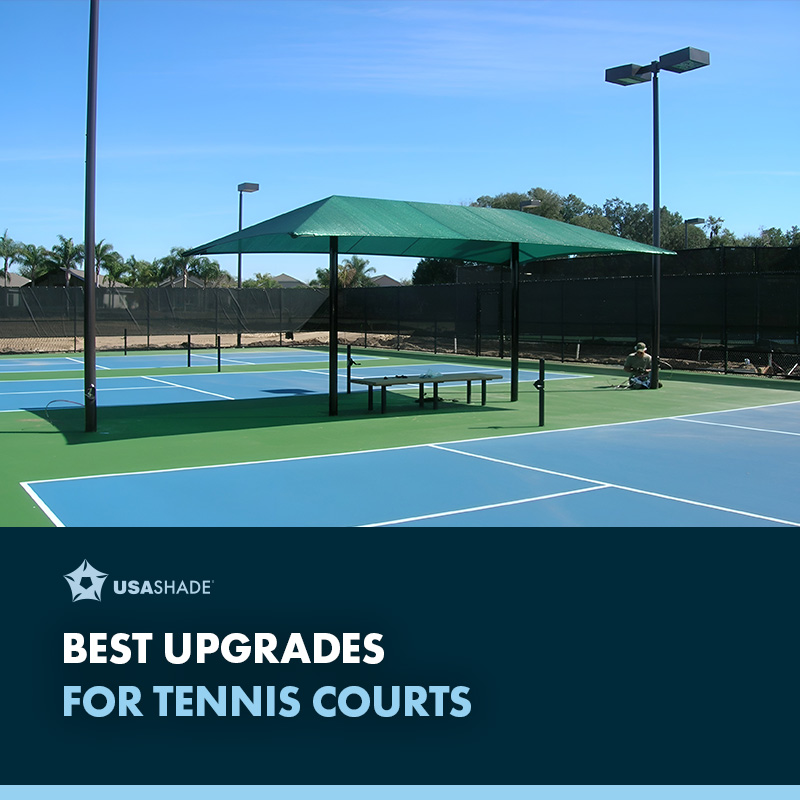
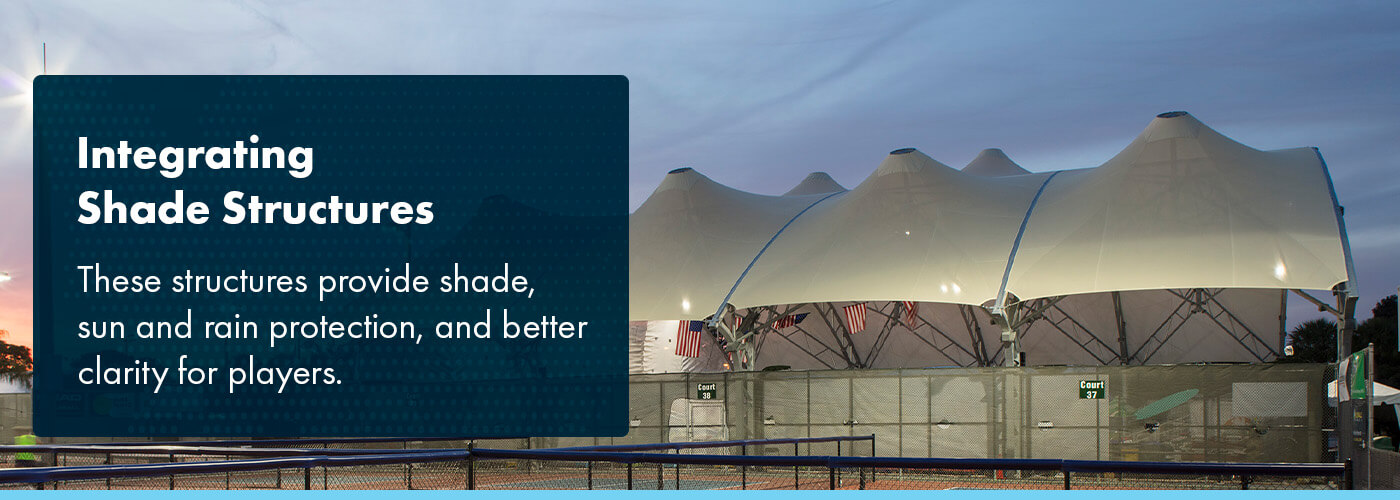
Adding pickleball court shade structures to your courts is an effective solution. These structures provide shade, sun and rain protection, and better clarity for players. Shade structures for pickleball courts come in a range of shapes, and you can customize them to meet your courts’ needs. This way, your outdoor courts can remain a go-to place to play throughout the year, especially if other courts in the area don’t have similar protection.
Pickleball Business Ideas and Amenities
Additional offerings can enhance the appeal of your pickleball courts, whether they’re indoors or outdoors. Many pickleball businesses generate additional revenue through:
- Membership programs and rewards
- Court rentals
- Pickleball lessons
- Tournament hosting
- Collaborations with local pickleball leagues
- Pickleball equipment rentals and sales
- Merchandise, such as T-shirts, pickleball paddles and baseball caps
It’s also important to keep players coming back by providing more than just a place to play. Some of the most popular and useful amenities include:
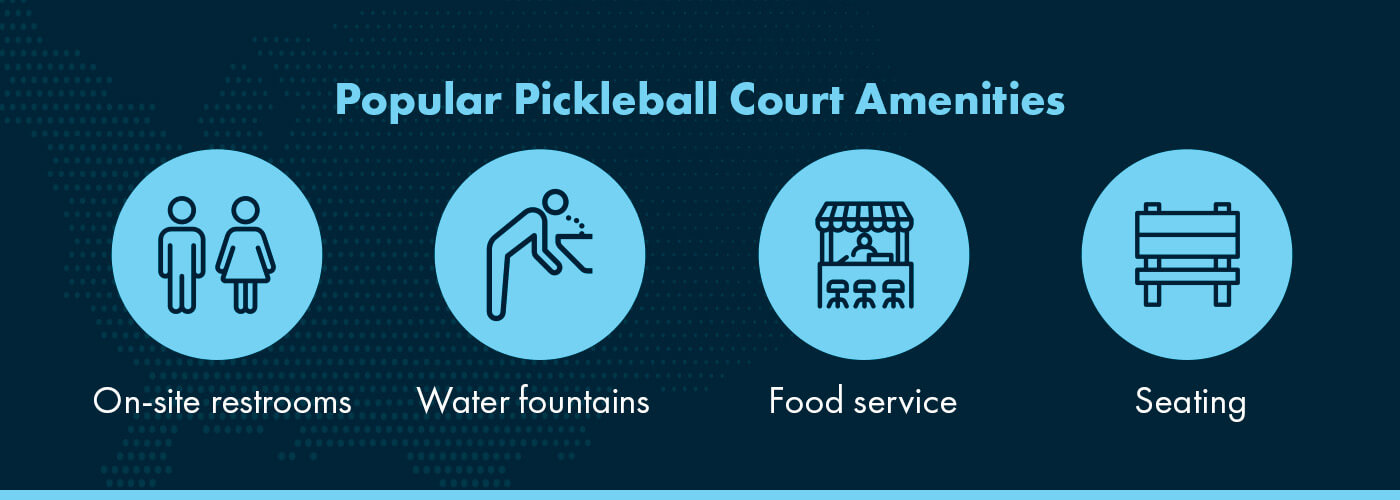
- On-site restrooms: These are a must for all pickleball facilities and are legally required by the Occupational Safety and Health Administration if you have employees working at your courts. If players can’t quickly access restrooms near the courts, they may find another place to play in the future.
- Water fountains compatible with water bottles: Help players stay hydrated by providing water fountain access close to the courts. Even better, you can invest in water fountains that make it easy to fill reusable water bottles.
- Food service: Depending on your business, you may want to provide different food service options for players and spectators. Smaller court facilities could have vending machines, while larger, indoor courts may provide snack bars.
- Seating: Whether you provide bleachers or benches, seating gives players a spot to rest and spectators a place to watch games from. Seating is especially important if your business plans to host tournaments.
Basic Operations and Management
Operating any successful business requires staff, technological support and regular maintenance.
Your staffing needs will vary depending on your facility’s size and amenities. While you may choose to take on some work yourself, you might need to hire staff for maintenance, training sessions, food sales or marketing. Incorporating technology can make managing employees and the business as a whole much simpler.
Online court booking systems make it easy for guests to reserve courts. You can also set up payment processing and membership management systems within your website to make things easier for customers. On the business planning side, enterprise management systems can help you assess your business’s performance, set goals, manage resources and track employee activity and payments.
When it comes to the courts themselves, keeping them well-maintained should be one of your top priorities. Daily inspections and cleaning will keep the play area safe and clean. If you or a staff member spots court damage, act quickly to close the court, make the right repairs, and get things back up and running.
Marketing Your Pickleball Courts
Marketing is essential when starting a pickleball business. With pickleball’s recent surge in popularity, building a community may seem simple. However, your business still needs to make connections and communicate a unique identity to grow and achieve its full potential.
The most basic part of building a community presence is creating an online footprint. Build or invest in a functional, well-designed website, and consider starting social media pages for your business to promote your courts online. Include customer testimonials and highlight unique amenities, offerings and opportunities to build interest in your pickleball courts.
From here, you can begin connecting with local pickleball organizations and those interested in starting pickleball teams or renting courts regularly, such as churches and schools. Cross-promotion can help your brand reach new players and build a reputation within the communities that value pickleball.
Install Shade Structures for Your Outdoor Pickleball Courts With USA SHADE
Now that you know how to start a pickleball business, you can begin planning and protecting your courts. If you’re considering building outdoor courts or amenities for your business, incorporating shade structures is a must.
USA SHADE and our custom shade structures can help. We offer various shade structures, from sails to cantilevers, and our range of waterproof products can protect your courts, rain or shine. By adding high-quality, durable shade structures, players can enjoy your courts and play more safely no matter the weather.
Pickleball courts across the United States have partnered with us to create beautiful shade structures that keep their players comfortable and protected. Whether you need a custom solution or quick ship shade structures with a fast 4-week lead time, USA SHADE can help make your pickleball courts a reality.
To learn more, fill out our contact form or call (855) 939-4877.