

Key Takeaways:
- When comparing cantilever vs. offset umbrella solutions, consider the difference between permanent engineered coverage and movable shade.
- An offset umbrella can provide flexible, localized coverage, while a cantilever structure can shade larger activity areas without a center post.
- The best option depends on the space’s permanence, weather conditions, maintenance capacity, coverage needs, and long-term value.
Commercial property managers, architects and planners often run into confusion when comparing cantilever and offset umbrellas. Both appear to solve the same challenge by providing shade without a center pole, yet they function very differently in commercial environments. Choosing the wrong option can lead to frequent replacements, higher maintenance demands and coverage that does not meet the needs of high-traffic spaces.
This comprehensive guide on cantilever and offset umbrellas will help explore which shade solution is right for you.
What Is the Difference Between an Offset and a Cantilever Umbrella?
At first glance, offset umbrellas and cantilever shade structures look similar because both place the support post outside the canopy area. This design keeps the shaded space open and unobstructed, which is especially useful in gathering spaces.
However, the difference between cantilever and offset umbrella solutions becomes clear when looking at portability, engineering and long-term use.
Offset Umbrella
An offset umbrella is a portable shade product with a side-mounted pole and a weighted base. These umbrellas are commonly used in light commercial or temporary environments. They function more like furniture than infrastructure. They provide flexibility but require ongoing attention.
Key characteristics of offset umbrellas include the following:
- Portable bases filled with sand or water
- Tilting or rotating canopy mechanisms
- Smaller coverage areas, often between 9 and 11 feet in diameter
- Manual setup and wind management
Cantilever Shade Structure
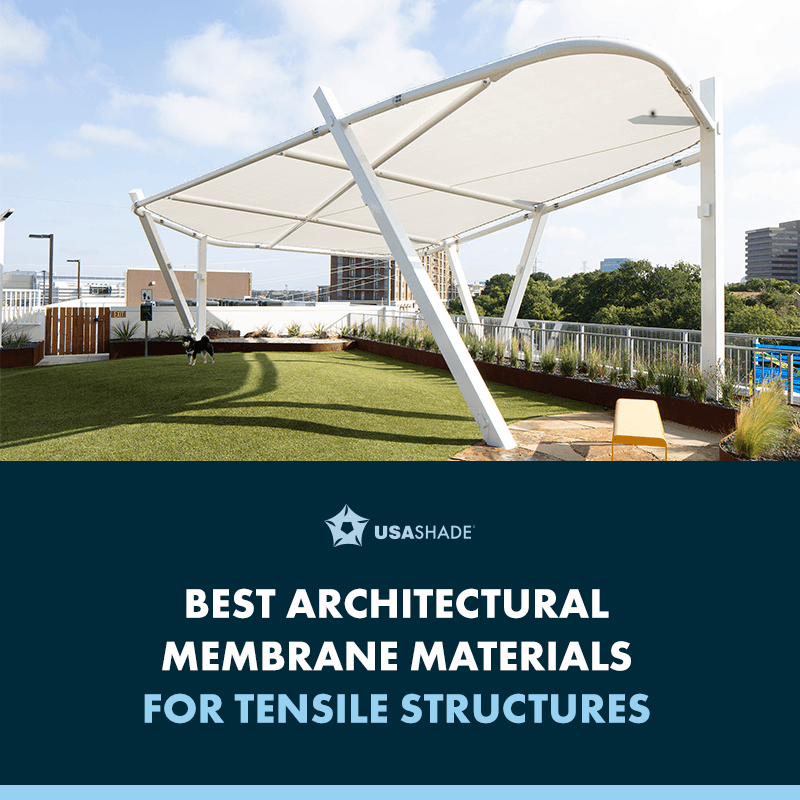
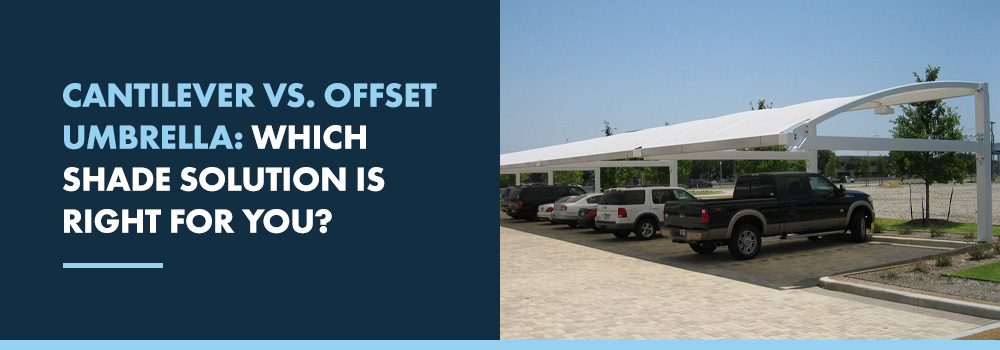
In commercial design and planning environments, a cantilever shade structure refers to a permanent installation engineered for durability and long-term performance.
Common characteristics of cantilever shade structures include the following:
- Steel columns anchored into concrete footings
- Large canopy spans that can exceed 20 feet
- Engineered construction designed for wind loads
- Minimal day-to-day maintenance
Analyzing the Offset Umbrella
Offset umbrellas can serve a purpose in commercial environments where flexibility is essential. At the same time, they present limitations when used in busy public spaces.
The following examples illustrate where offset umbrellas can be helpful:
- Flexible layouts: Restaurants or event venues that rearrange seating regularly may benefit from movable shade.
- Seasonal installations: Temporary markets, pop-up retail areas or short-term events can use offset umbrellas without permanent construction.
- Smaller coverage needs: Compact courtyards or patios may only require limited shade.
While these benefits exist, offset umbrellas can create operational challenges.
The following often arises in public or high-use environments.
- Wind vulnerability: Staff often need to close umbrellas during gusty conditions to prevent tipping or inversion.
- Maintenance demands: Cranks, tilt systems and joints tend to wear down faster when used frequently.
- Security concerns: Portable bases can be moved or damaged in open public areas.
Cantilever Shade Structures in Commercial Environments
Cantilever shade structures are often selected when a project requires durability, consistent coverage and long-term reliability. The side-post design allows large areas to remain open and usable while still delivering shade. This design works especially well in spaces where activity happens directly beneath the canopy.
Examples include the following:
- Playgrounds where supervision areas need coverage without obstructing sightlines
- Bus stops where people gather in tight spaces
- Pool decks where lounge chairs and walkways must remain open
- Bleachers where spectators need shade without blocked views
- Corporate campuses creating comfortable outdoor meeting areas
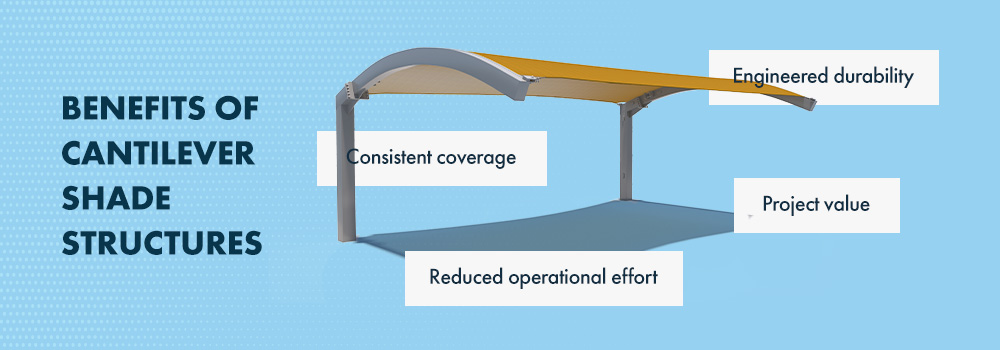
Beyond usability, cantilever structures are built differently from offset umbrellas. The following characteristics explain why they are often chosen for permanent installations:
- Engineered durability: Steel frames and concrete footings provide structural stability in demanding environments.
- Consistent coverage: Larger canopy spans shade entire activity zones instead of individual seating areas.
- Reduced operational effort: No daily opening, closing or repositioning is required.
- Project value: Architectural shade structures can enhance a space’s visual identity while improving usability.
Key Features: Cantilever vs. Offset Umbrella
Both solutions provide shade, but in very different ways. The following comparisons highlight the most important differences:
- Wind performance: Offset umbrellas typically need to be closed during strong winds, while cantilever structures are engineered to meet local building requirements.
- Coverage area: A single offset umbrella may cover a table or seating cluster, while a cantilever structure can shade playground equipment, parking areas or gathering spaces.
- Lifespan: Offset umbrellas often need replacement after one or two seasons of heavy use, while permanent shade structures can last for many years with proper fabric care.
- Visual impact: Offset umbrellas provide functional shade, while cantilever structures can contribute to a property’s identity and design.
What to Consider When Choosing Your Shade Solution
Selecting the right option depends on how your business plans to use the space. Shade solutions should align with layout permanence, environmental conditions and operational capacity.
1. Site Permanence
If the layout of a property is fixed and long-term improvements are planned, permanent shade structures often add value to the project. Temporary layouts or leased spaces may benefit from movable shade instead.
2. Weather Conditions
Wind exposure, intense sun and heavy public use often require engineered shade solutions. Portable offset umbrellas may struggle to perform consistently in these environments.
3. Maintenance Capacity
Some facilities have staff available to manage shade equipment daily, while others do not. Permanent structures reduce operational involvement because they remain in place year-round.
4. Budget and Long-Term Value
Offset umbrellas generally have a lower up-front cost. Cantilever structures typically involve a higher initial investment but may reduce replacement and maintenance costs over time.
Considering the total cost of ownership often helps decision-makers evaluate long-term value rather than short-term expense.
How to Know Which Is Right for Your Business
The question becomes easier to answer when project goals are clear. Offset umbrellas may be appropriate in the following situations.
- Short-term installations, such as temporary seating areas or seasonal venues
- Movable layouts for spaces that change configuration frequently
- Small courtyards or areas with limited coverage requirements
Cantilever shade structures may be the better choice in these situations.
- Public gathering spaces, such as parks, schools and aquatic centers
- Corporate campuses, outdoor collaboration areas and employee spaces
- Commercial developments, like plazas, shopping centers and transportation hubs
- Long-term projects and permanent installations designed to serve communities for years
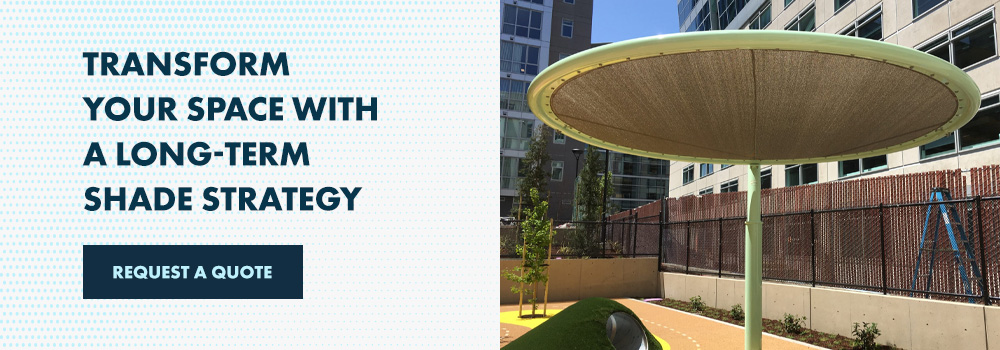
Transform Your Space With a Long-Term Shade Strategy
Choosing between an offset umbrella and a cantilever structure often comes down to permanence, maintenance expectations and how your business wants the space to function over time. Temporary shade can solve short-term needs, but permanent structures often provide broader coverage, improved usability and a stronger visual presence for gathering spaces.
For organizations planning parks, schools, corporate campuses or community spaces, shade is more than a comfort feature. It supports how people use the environment, how long they stay and how they experience the space throughout the year.
USA SHADE helps organizations create lasting shade structures designed around their vision, site conditions and project goals. Use our builder tool to customize your structure, or explore the architectural studio resources to see how USA SHADE delivers comfort for businesses like yours. To start planning a shade solution built for long-term performance, request a quote today.