

While pools are a hallmark of leisure time and summer fun, they are also complex environments where safety expectations, operating costs and guest experience intersect every day.
Shade structures for pool areas directly affect how well these environments function. They influence sun exposure levels, ground surface conditions, how long visitors want to hang out at the pool and where staff can comfortably work throughout the day.
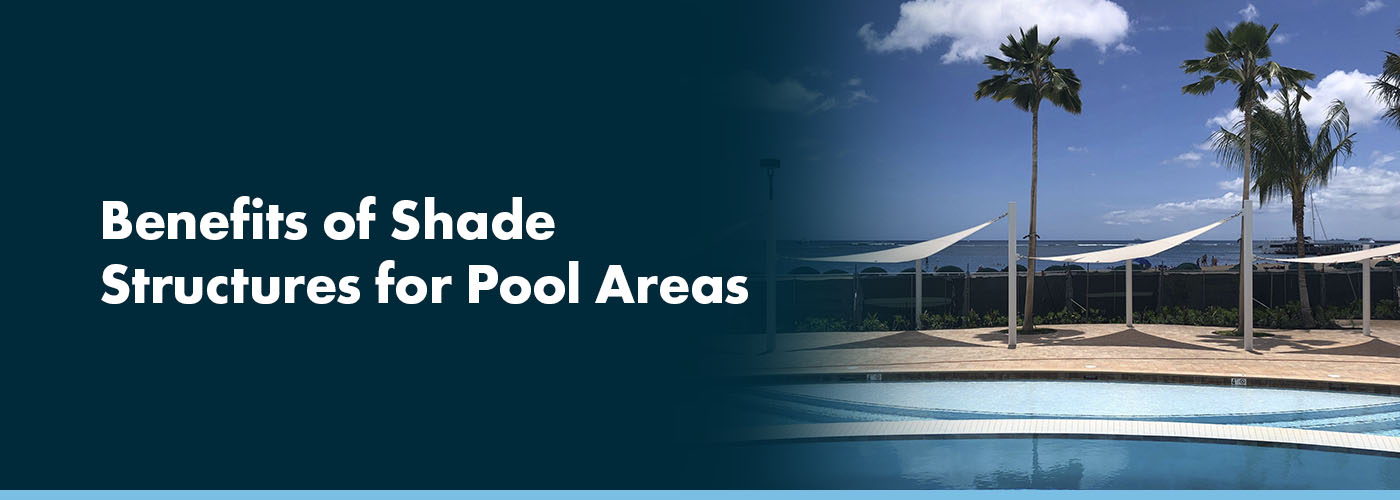
Fabric shade structures are permanent additions that integrate directly into the facility layout. Shade for the pool can block up to 97% of ultraviolet rays while still allowing air to move freely. This balance preserves open sightlines and ventilation during peak hours.
Mitigating Health Risks With Advanced UV Protection
Aquatic facilities create unique exposure conditions that aren’t always obvious. Water reflects sunlight upward, and wet surfaces intensify glare. When guests and staff spend long stretches near the pool, these conditions increase the risk of sunburn and heat-related illness.
Pool-area shade changes the level of sun exposure on the pool deck by controlling the environment. This approach provides predictable protection throughout the day, even as crowds, activities and staffing rotations change.
Shade structures help facilities manage health considerations in various ways.
- Reducing UV reflection: Shade structures for pools reduce the indirect UV exposures created when sunlight reflects off water, lowering the risk for lifeguards, instructors and guests near the pool edge.
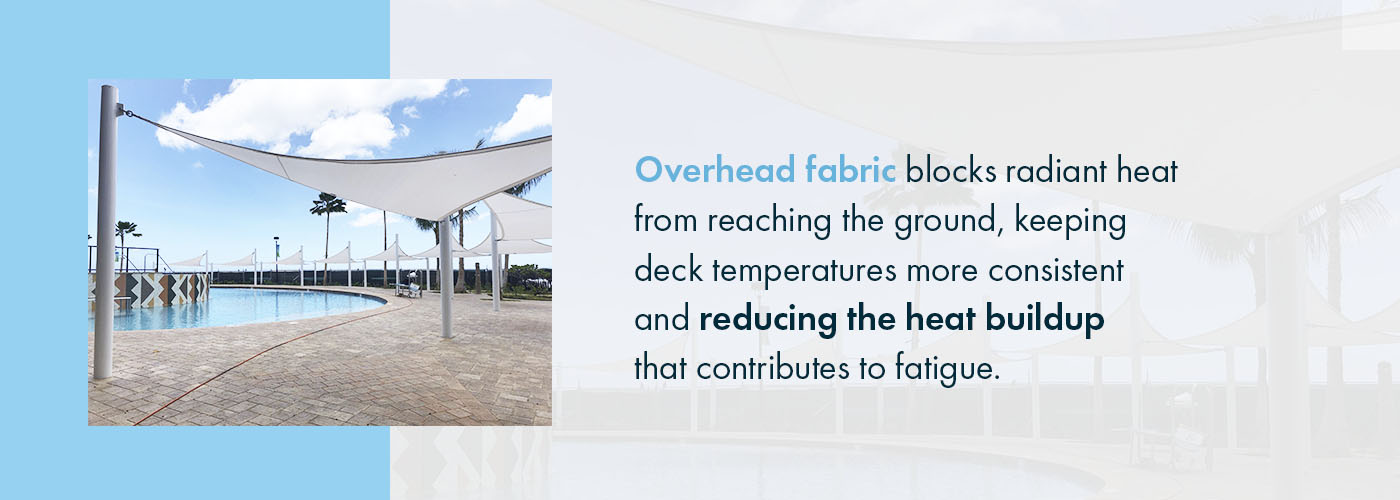
- Lowering ambient temperature: Overhead fabric blocks radiant heat from reaching the ground, keeping deck temperatures more consistent and reducing the heat buildup that contributes to fatigue.
- Providing coverage for high-use zones: Permanent shade over seating, instruction and supervision areas allows layouts to remain consistent during the busiest parts of the day.
Extending Asset Lifespan and Reducing Overhead
Sun exposure also speeds chemical degradation, increases evaporation and damages surface materials. These effects contribute to many of the hidden costs associated with pool ownership.
Shade structures change wear patterns by reducing how much solar energy reaches water, deck surfaces and other equipment throughout the day. With less direct sunlight, water temperatures rise gradually, chemical reactions driven by UV exposure occur more rarely and surrounding materials absorb less heat.
Reduced direct sunlight also limits the light conditions that encourage algae growth on pool walls, steps and surrounding wet surfaces, potentially reducing the frequency of manual cleaning and surface treatment.
This approach protects long-term investments and reduces unnecessary spending.
- Slowing chlorine burnoff: Poolside shade supports more stable chemical usage patterns, reducing fluctuations and frequent adjustments.
- Minimizing evaporation: Shade at the swimming pool may reduce evaporation by limiting heat gain at the water’s surface during the day. However, wind, humidity and ambient temperature still contribute to water loss.
- Protecting deck materials: Overhead coverage limits prolonged sun exposure on deck surfaces and furnishings, retaining their appearance and function longer.
- Limiting algae growth: Less buildup on wet surfaces can reduce the need for unplanned deck closures or access restrictions during the operating season.
Transforming Pool Areas Into Architectural Destinations
Generously sized pool decks can feel expansive and exposed without vertical design elements, leading guests to cluster in limited shaded areas or retreat indoors.
Shade structures introduce form, rhythm and spatial definition. Designers use shade structures to organize space and improve the flow between decks and seating areas.
Creating an architecturally engaging pool area goes beyond function to reshape how people use and experience the space.
- Vertical design elements: Sculptural shade structures introduce height and visual rhythm across the pool area. This balance offsets expansive water features and adjacent amenities while creating clear focal points.
- Defined functional zones: Strategic placement of shade structures for pool areas divides the space into clear-cut areas for seating, lounging, observation and activity without adding barriers.
- Customization and branding: A broad fabric and color selection lets you match your shade structures to your school spirit, resort palette or seasonal programs, reinforcing a cohesive architectural language.
Driving Revenue Through Enhanced Guest Experience
Guest comfort dictates their behavior at the pool. Visitors will head home early if deck surfaces overheat or the sun becomes too intense, and that dip in usage affects revenue.
Strategically placed shade keeps high‑traffic areas usable during the hottest hours. Water warms more slowly in shady spots, maintaining more pleasant swimming conditions throughout the day.
Shade structures are a considerate improvement that can boost your bottom line in several ways.
- Increasing dwell time: Shaded seating and circulation areas encourage guests to relax by the pool, potentially inspiring them to spend more money on drinks and snacks.
- Extending seasonal usability: Coverage keeps the pool deck functional during midday heat and transitional months when direct sun would otherwise limit visits.
- Giving businesses competitive differentiation: Well-shaded facilities stand out as premium destinations, supporting repeat visits and stronger demand across resorts, campuses and community centers.
Strategic Design Options for Aquatic Facilities
Effective pool area shade depends on design choices that reflect how people use and maintain the space over time. Aquatic environments need systems that preserve visibility, adapt to irregular layouts and can withstand constant exposure to moisture and chemicals.
Choose a design that fits your pool area’s layout, use patterns and operating needs, factoring in considerations like these.
- Unobstructed views with cantilever systems: Cantilever shade structures for pool areas eliminate interior columns near swimmers and walkways, maintaining sightlines and open space.
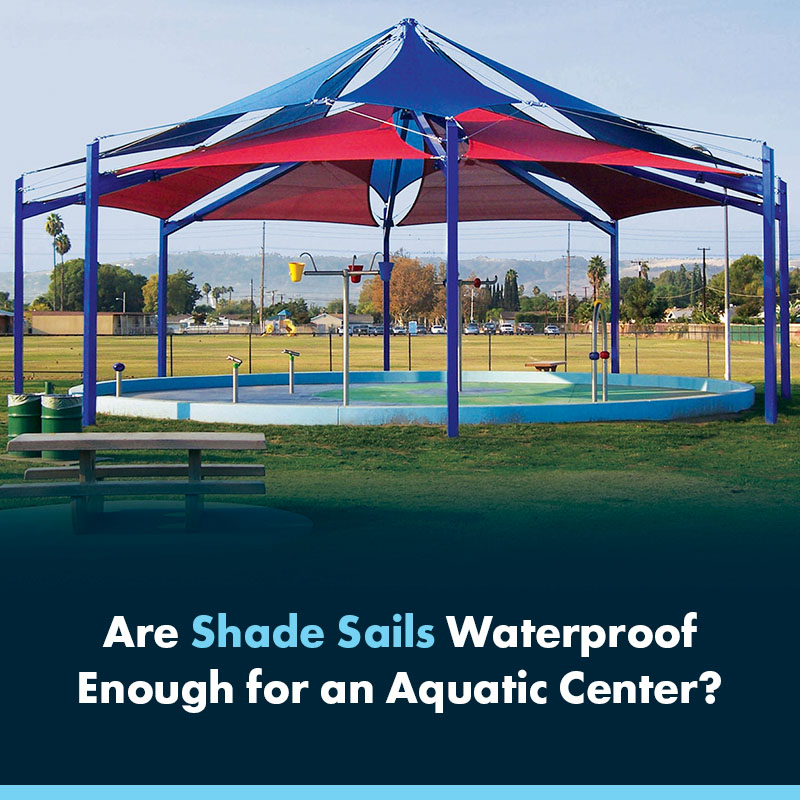
- Modular versatility with shade sails: Multipoint shade sails can accommodate complex geometries and phased retrofits, expanding your business’s coverage without reworking existing layouts.
- Material durability: High-density polyethylene fabric paired with powder-coated steel frames resists corrosion, fading and structural fatigue in humid, chlorinated environments.
Operational Planning Beyond the Pool Area
Shade influences staffing and programming by keeping designated areas usable when UV exposure and heat buildup might otherwise restrict activity. While the forecast may still affect operations, the consistent coverage provided by structured shade reduces the need for day-to-day adjustments tied specifically to the sun.
Operational gains have far-reaching effects.
- Improving staff efficiency: Shaded observation and instruction allow lifeguards, swim coaches and instructors to remain visible and approachable, instead of relocating to manage exposure.
- Supporting program scheduling: More consistent conditions in shaded zones allow lessons, camps and group activities to run as planned without frequent agenda alterations.
- Coordinating maintenance activities: Moderated conditions help maintenance teams plan cleaning and service tasks around standard operating hours, instead of coming in early or staying late to mitigate heat.
Long-Term Value for Public and Commercial Facilities
Shade structures influence how gracefully your business’s facilities and amenities age. By moderating environmental stress, they help pools retain visual quality and functional performance over time. Seating, furniture, play equipment and other exposed elements experience less wear under these conditions.
Shade should be part of the infrastructure for facilities that operate aquatic spaces year after year, including schools, public pools, hotels and resorts.
Consider these long-range advantages of investing in shade for your pool.
- Life cycle planning: Reduced wear extends the lifespan of surfaces and furnishings, so you won’t have to replace them as often.
- Capital protection: Shade structures preserve the appearance and usability of high-cost installations, protecting your business investment.
Designing Pool Areas for Comfort, Performance and Longevity
Pool areas face ongoing pressure from heat, ultraviolet exposure and environmental wear that can shorten usable hours and strain long-term operations. Investing in permanent shade structures is one way to manage these conditions while supporting usability and consistent performance over time.
The USA SHADE builder tool turns your business goals into a shade strategy that fits the real world. By visualizing coverage and structure early, your business can plan shade that reduces UV exposure and protects materials. Then, our team will carry those decisions through design, fabrication, construction and installation so the structure’s shade system meets your long-term operational goals.
Contact us today to discuss your business’s project and start shaping a structured shade solution.