

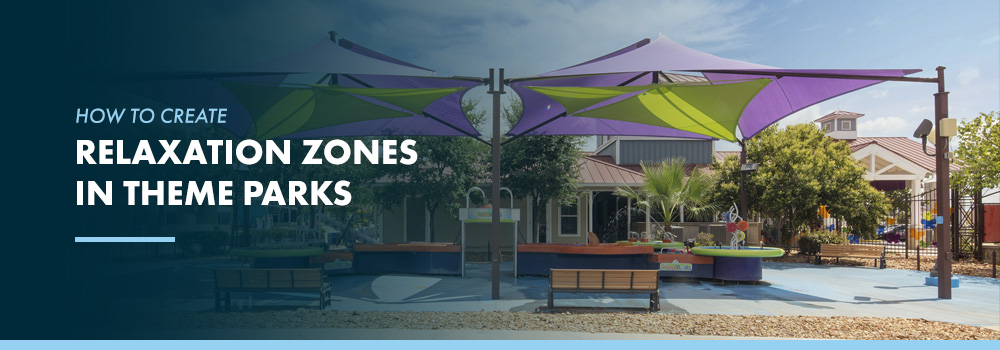
Theme parks face a universal challenge of guest burnout. Heat, crowds, sensory stimulation and long lines cause exhaustion that shortens visits, reduces spending and generates negative reviews. Strategic, purpose-built relaxation zones improve guest satisfaction. These intentionally designed spaces extend dwell time and enhance your business’s reputation.
This guide offers a blueprint for creating zones that transform guest experience from overwhelming to memorable.
Why Relaxation Zones Are a Business Imperative
Physical and sensory overload influences how long guests stay and how fully they engage with a park’s attractions. Well‑designed relaxation zones counter these pressures by offering intentional moments that reset the guest experience.
Research on guest emotions at theme parks shows that feelings generated at one touch point influence every interaction that follows. That’s why restorative space design is a strategic necessity. Poorly conceived theme park respite zones diminish the experience, while thoughtfully designed ones enhance it.
These design principles make relaxation zones a seamless, genuinely restorative part of a day at the park.
Foundational Principles of Relaxation Zone Design
Creating restorative environments requires understanding psychological and spatial theories. Attention restoration theory explains how natural environments allow mental recovery by engaging involuntary attention. When applied to theme parks, this means creating quiet areas that offer visual interest without being mentally demanding.
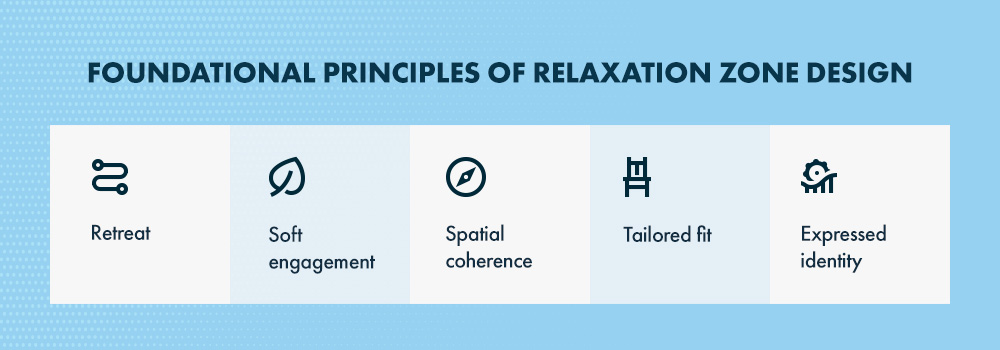
Building on these principles, environmental psychology research has identified five specific qualities that make relaxation zones restorative.
- Retreat: Spaces feel separated from the park’s high-energy attractions and crowds.
- Soft engagement: Guests find visual interest through natural elements and gentle theming rather than stimulating entertainment.
- Spatial coherence: Layouts feel intuitive and easy to maneuver around, with clear pathways and sight lines.
- Tailored fit: Seating and amenities accommodate groups of different sizes, ages and accessibility needs.
- Expressed identity: Consistent motifs create a distinct sense of place that contributes to the park’s story and ambience.
These principles guide every design decision, from individual bench placement to configuration. Because theme parks continually evolve to maintain their appeal, relaxation zone design must use a flexible framework that allows for updates and adjustments over time.
Strategic Location and Layout
Placement strategy operates on macro and micro scales.
- At the macro level, relaxation zones should be readily visible, yet positioned away from high-traffic pathways and loud attractions. Consider placement near restroom facilities for natural discovery.
- At the micro level, internal layout establishes a natural flow. Consider arranging seating in clusters to accommodate different group sizes while maintaining personal space.
Use signs to communicate these spaces:
- Sensory maps help neurodivergent guests plan their experiences and identify relaxation areas.
- Signage at decision points guides people when needed.
- Well-designed lines use wait time to advertise nearby attractions and amenities.
The Psychology of Rest and Mental Decompression
Research comparing green parks to colorful urban parks shows that environments emphasizing natural colors and textures increase calmness more effectively than spaces with bright, competing elements.
These zones should deliberately contrast with surrounding attractions. While rides and entertainment areas use bold colors and dynamic lighting, relaxation areas benefit from different palettes:
- Earth tones create visual calm.
- Natural wood textures soften the built environment.
- Vegetation provides organic visual interest without overstimulation.
This design shift signals guests have entered a recovery space, creating the mental decompression necessary for effective rest.
Integrating Localized Narratives and Theming
Placemaking transforms rest stops into memorable destinations by weaving local stories and cultural elements into the design and contributing to the park’s story. Research shows that storyworlds and thematic landscapes are crucial for theme park success. Attractions presenting compelling narratives impact guests’ emotions and behavior.
Apply this approach by incorporating regional architectural elements, native plants and cultural motifs.
- Coastal parks: Feature maritime theming with weathered wood and nautical details that reference local environments.
- Southwest locations: Incorporate adobe-inspired structures and desert landscaping to celebrate regional architecture.
- Mountain or alpine settings: Use natural stone, timber construction and native evergreens to blend with the wider landscape.
With these design principles established, let’s examine the specific physical elements required to bring these concepts to life.
Core Components of an Effective Relaxation Zone
Moving from theory to execution requires specific elements that create genuinely restorative environments.
Foundational Comfort With Seating and Surfaces
Seating variety accommodates different guest needs:
- Fixed benches with backs provide stable seating for elderly guests or those with mobility challenges needing support.
- Picnic tables serve families wanting to spread out snacks or belongings in semi-private zones.
- Movable chairs allow guests to customize the arrangement, choosing sun or shade, proximity to others or viewing angles.
A thoughtfully designed park seating area includes:
- Accessible design
- Weather-resistant furniture
- Pedestrian and safety lighting
- Integrated shade structures
- Permeable paving that accommodates mobility aids
Cooling for Enhanced Comfort
Shade structures form the foundation of an effective cooling strategy for theme park relaxation zones. As extreme weather intensifies, these types of solutions are essential.
Consider supplementary cooling systems:
- High-pressure misting creates evaporative cooling, reducing ambient temperatures and making spaces more comfortable during peak heat.
- Ceiling fans mounted to shade structures increase air circulation.
- Green spaces and tree canopy provide natural cooling through transpiration while enhancing calming aesthetics.
Essential Relaxation Zone Amenities
Charging stations equipped with USB ports and standard outlets allow visitors to recharge devices while resting. For parks committed to sustainability, solar-powered options reduce operational costs and demonstrate environmental responsibility.
Easy access to water encourages guests to spend more time in relaxation zones. Hydration stations should offer bottle-filling capabilities and traditional fountains positioned near seating areas.
Accessibility features benefit everyone. All pathways must meet ADA standards, with appropriate widths, slopes and surface textures that accommodate wheelchairs and mobility aids. Seating areas need companion spaces that allow wheelchair users to sit alongside their groups. Parents with strollers and elderly visitors also benefit from these thoughtful design choices.
While all these components matter, shade structures are the element that anchors the entire relaxation zone and defines its character.
Shade Structure Function and Architectural Statement
Shade structures create a functional, aesthetic foundation for relaxation zones. The type your business selects impacts guest comfort, theming coherence and long-term value. Beyond sun protection, these become architectural statements contributing to park identity.
Selecting the appropriate structure means balancing coverage area, complementary designs, site-specific constraints and your budget parameters. A comprehensive shade structure buyer’s guide provides a framework for evaluating these options and making an informed decision.
Evaluating Structure Types
Different types offer distinct advantages. For example, shade sail structures serve as artistic focal points with curved forms. Their asymmetrical shapes efficiently cover irregular seating areas, and multiple sails at varying heights create visual interest.
For larger areas, cantilevered shade structures maximize usable space by eliminating center posts that obstruct arrangements or traffic flow. These work well for amphitheater seating, outdoor dining or playground shade.
Meanwhile, custom shade structures become iconic landmarks that define park identity, incorporating specific theming elements, unusual shapes or integrating with existing architecture.
Material and Fabric Considerations for Durability and Long-Term Value
Fabric selection impacts structure performance and longevity. High-quality architectural fabrics withstand UV exposure, wind stress and weather cycling. Understanding the anatomy of a shade structure helps evaluate material performance.
Commercial-grade fabrics offer specific characteristics:
- UV blocking percentage
- Fabric strength
- Fire resistance ratings
- Warranty duration
Premium materials deliver greater long-term value through typically longer lifespans and reduced maintenance, protecting your business’s investment.
Frame materials require equal consideration. Structural steel with protective coatings resists corrosion, while powder-coated finishes add color while protecting metal.
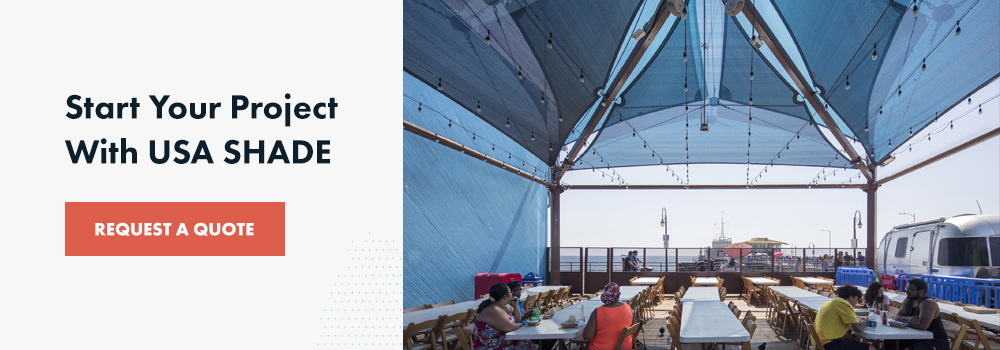
Start Your Project With USA SHADE
Theme park relaxation zones improve guest satisfaction and create conditions that naturally encourage longer visits. By combining restorative design principles with high-quality shade structures, your business can transform guest experience while enhancing reputation.
USA SHADE provides custom shade structures and exceptional service from initial concept through installation. Our in-house design, engineering, manufacturing and project management teams work as a single source for shade solutions, whether your business needs custom structures, space-maximizing cantilevers or artistic sail systems.
Explore our amusement and entertainment portfolio to see how we’ve partnered with entertainment venues or contact our team to start your project.