

There are around 270,000 tennis courts in the U.S. alone. Every year, many of these courts experience cracks, endless piles of leaves, sun damage and more. Over time, these problems can compound until the court is completely unplayable.
This is why tennis court maintenance is so important. It keeps courts in more pristine condition so players can have the best experience possible. It helps owners avoid more costly repairs and extend the life span of their courts, too.
Keep reading to learn how to maintain outdoor tennis courts for longevity.
Why Outdoor Tennis Court Maintenance Is Important
A regular maintenance schedule won’t just make your court more aesthetically appealing. It also:
- Ensures consistent playability: If a court isn’t maintained regularly, it can become unplayable. Large cracks can form, and nets may begin to sag below standards. A clean court has a more consistent ball bounce, which ensures that games are decided by skill. This dedication to court quality may even encourage more local leagues to use your facility.
- Decreases the total cost of ownership (TCO): Regular maintenance takes time and effort, but it can save a lot of money in the long run by reducing the chance of crack formation or expansion. It can even delay court resurfacing. This proactive approach often drastically reduces the court’s TCO so your business can invest funds elsewhere.
- Boosts curb appeal: A pristine court that adheres to the International Tennis Federation’s court standards adds value to the venue around it. It also makes the court more attractive to prospective players. Both these effects can lead to an increase in revenue.
How to Maintain a Tennis Court
Outdoor tennis court maintenance follows a series of cycles. Some practices need to be repeated every day, while others only need to be done once a year. Different court surfaces have different needs, though, so there will be some variability.
Here’s a general action plan that can serve as the baseline for maintenance.
Daily Tennis Court Maintenance
Start by visually inspecting the court surface at the end of the day. Look for empty snack bags, bottles and other loose trash. These can all be bagged and put in the garbage. A trash grabber can be a big help here.
A blower or broom spot-cleans areas of debris, leaves and dirt quickly. If any bags or other equipment were left on the court, take them to the Lost and Found so players can retrieve them later. If your facility has a clay court, brush any loose top material to keep the court level. It’s also a good idea to check the court’s moisture levels and water it lightly if needed.
Weekly Tennis Court Maintenance
Weekly maintenance practices are more thorough. Start by clearing the entire play surface and perimeter of all leaves, dirt and other debris. A blower or broom is best for this task. Just be sure they are fully removed from the court rather than blown into a corner.
Next, inspect the net, strap and posts. Look for signs of wear, such as rust in the posts or tears in the net, and schedule repairs or replacements as needed. Confirm the net tension is level across the whole court.
Monthly Tennis Court Maintenance
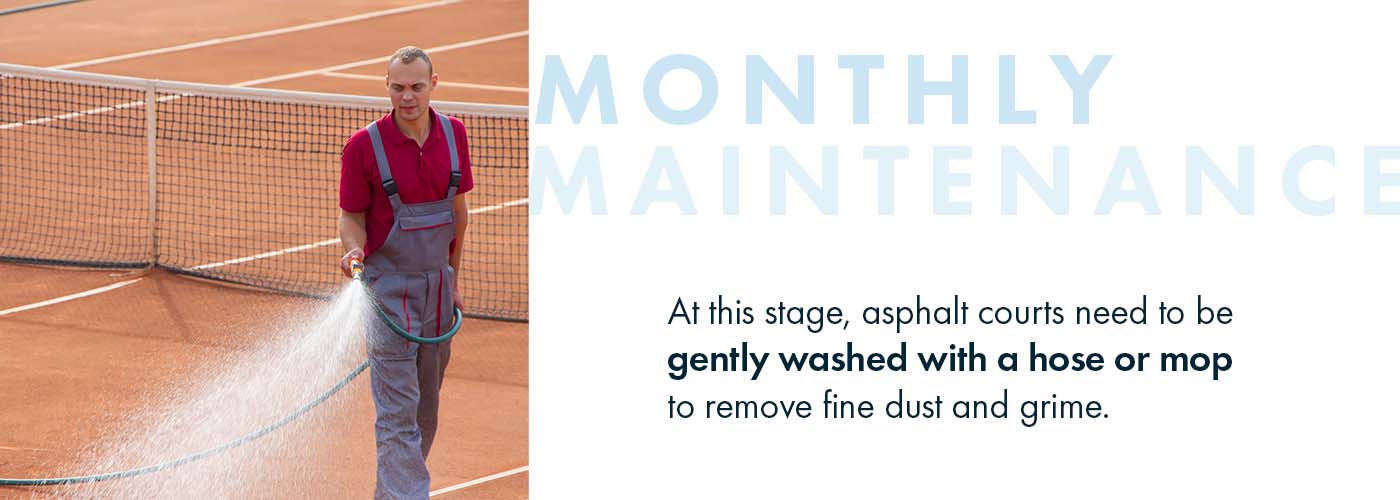
At this stage, asphalt courts need to be gently washed with a hose or mop to remove fine dust and grime. Mixing in a mild detergent can help. It’s best to avoid using a power washer, as it can damage the court surface. Clean away moss, mold or algae with the detergent mixture.
This is also the ideal time to fill in any low spots and redistribute high spots on a clay court for a more level playing surface.
Annual Tennis Court Maintenance
Once a year, many tennis court owners schedule a professional deep clean. This frees them up to focus on other repairs while professionals clear the play surface of embedded dirt, stains and mold. The court cleaners may also identify cracks and faded areas that might otherwise be missed. They can then treat those issues or make recommendations for how to best proceed. In some cases, it may be necessary to resurface the court entirely.
The annual inspection is a good time to assess the condition of fencing, gates and lighting systems. Address any issues, such as rust in the gate, gaps in the fence or broken overhead lights.
Many clay courts are resurfaced and leveled once a year. New line tape may also need to be installed.
Maintenance Tips for Different Court Types
Courts are separated into types based on what the play surface is made of. The three most prominent types are hard courts, clay courts and grass courts:
- Hard courts: Typically made of concrete or asphalt, these are coated with a layer of acrylic. If your business owns one of these courts, the primary maintenance goal is to protect its coating. Small cracks can be filled with acrylic patch materials, which help prevent water from getting underneath the surface. The coating may still require resurfacing every few years.
- Clay courts: These require a consistent moisture level to keep the surface from becoming too hard or dusty. They also benefit from being brushed and rolled periodically to keep the surface smooth. Many court owners invest in specialized equipment to make these processes easier.
- Grass courts: Grass needs to be watered periodically and mowed regularly. New lines will need to be applied as the old ones start to become thin.
The Role of Shade Structures in Court Preservation
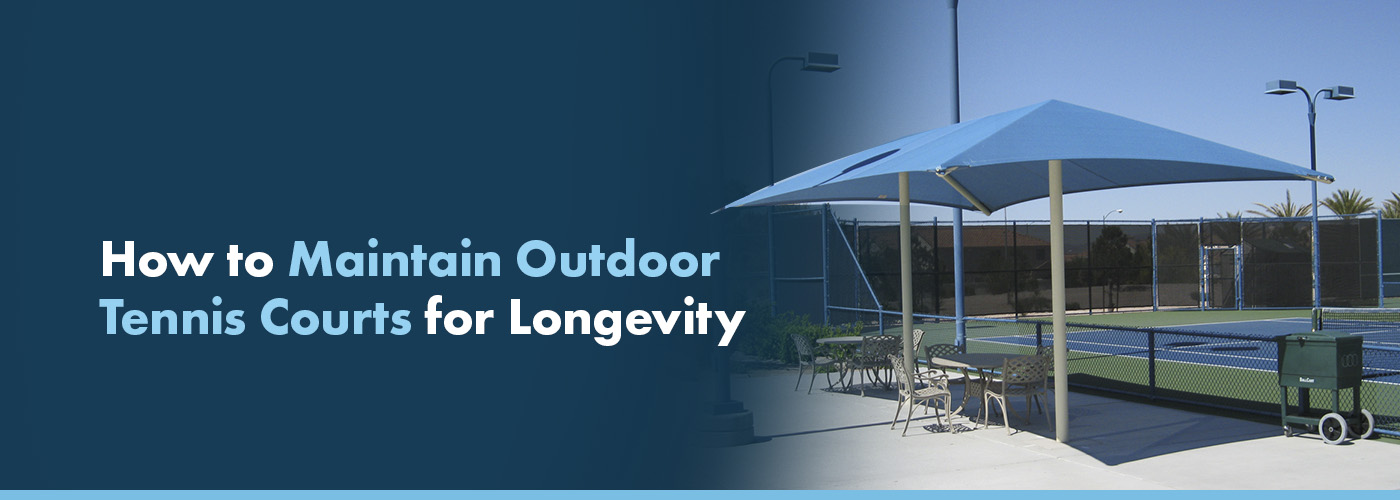
All outdoor courts, whether concrete or clay, can benefit from shade structures. They’re a great way to both maintain a tennis court and make the experience more comfortable for players.
Shade structures can protect the court from excess heat and harmful ultraviolet (UV) radiation. These rays can cause court colors to fade and break down binders in the surface material. Eventually, this will cause cracks to form. The courts will also be more comfortable to play on.
Shade structures also help protect the court from leaves, bird droppings and rainfall. This can decrease maintenance times and help keep the courts clean during the day.
Give Your Court the Shade It Deserves With USA SHADE
For over three decades, we at USA SHADE have been providing courts just like yours with beautiful custom-built shade structures. We work right alongside your business at every stage of the process. Whether you’re looking for a simple cantilever or a more complex structure, our highly experienced teams can make it happen. But don’t just take our word for it. Take it from one of our many satisfied clients.
To learn more, request a quote today.

Linked Sources:
- https://www.racquetindustryresearch.org/page/research_general
- https://www.itftennis.com/media/7221/2025-rules-of-tennis-english.pdf
- https://www.usa-shade.com/blog/the-science-of-shade-how-shade-structures-block-uv-rays-and-heat/
- https://www.usa-shade.com/product-category/custom/
- https://www.usa-shade.com/product-category/cantilever/
- https://www.usa-shade.com/projects/
- https://www.usa-shade.com/request-a-quote/