

Key Takeaways:
The most sustainable shade solutions for large outdoor areas are fabric shade structures built from eco-friendly materials, such as durable, UV-stabilized fabric that resists wear and reduces long-term replacement waste.
- Urban shading: Cities rely on fabric shade structures, including cantilevers, sails and single-post canopies, to combat urban heat islands and reduce outdoor heat exposure by up to 30% in parks, playgrounds and public spaces.
- Eco-friendly shade solutions: Long-lasting, weather-resistant fabrics cut down on frequent replacements, lowering material waste and environmental impact compared to shorter-lived shading alternatives.
- Corporate outdoor spaces: Shade structures improve corporate outdoor spaces by creating comfortable areas for employees and visitors, extending outdoor usability in warmer months while protecting furniture and equipment from UV degradation.
Urban environments face unique challenges when it comes to shade regulation. With densely packed buildings and a lack of vegetation, cities face obstacles to creating safe and usable spaces.
In urban areas, concrete, asphalt and buildings trap heat, which can cause cities to be significantly warmer than rural areas. Cities across the nation are implementing fabric shade structures in public playgrounds, parks and outdoor spaces to combat the effect of urban heat islands and make urban outdoor spaces safer and more comfortable.
Discover the importance of shade structures for urban spaces and explore the top solutions for cities, parks and public spaces.
The Benefits of Shade in Urban Areas
Rural areas benefit from the natural shade and air-purifying capacities of trees, which provide people and environments with countless benefits, such as improved comfort, psychological benefits and better air quality. Shade is a year-round public health necessity, particularly in warmer climates and during summer months.
Adding shade structures to urban outdoor spaces has various advantages:
- Reduced heat exposure: Shade can be used to reduce heat exposure and outdoor heat burden by up to 30%, which can reduce the public’s risk of dehydration, heatstroke, heat rashes, heat exhaustion, and other heat-related illnesses.
- Enhanced comfort and walkability: Particularly in warmer, sunnier months, walking in urban outdoor areas without shade may prevent people from walking outside comfortably.
- Lower UV exposure: Routine exposure to UV radiation in urban areas is directly related to numerous adverse health effects, including sunburn, eye damage and an increased risk of skin cancer.
- Higher community usage: People tend to avoid unshaded equipment, walkways and seating in urban outdoor areas in warmer months, due to uncomfortable or unsafe conditions. Shade structures can extend the usability of these spaces.
- Enhanced infrastructure protection: Shade protects urban infrastructure, such as benches, picnic tables and playground equipment, from UV degradation.
Types of Shade Solutions
The most traditional shade solution is natural: trees. Trees naturally improve air quality, protect people from UV radiation, lower temperatures and enhance the appearance of urban areas. However, trees can take years to mature and provide sufficient coverage, and many urban environments are not suitable for supporting their growth.
With high UV protection and immediate coverage upon installation, fabric shade structures are a versatile, reliable urban shading alternative to tree canopies. Available in a variety of sizes and shapes, these structures can be adapted to fit a wide range of urban environments and architecture.
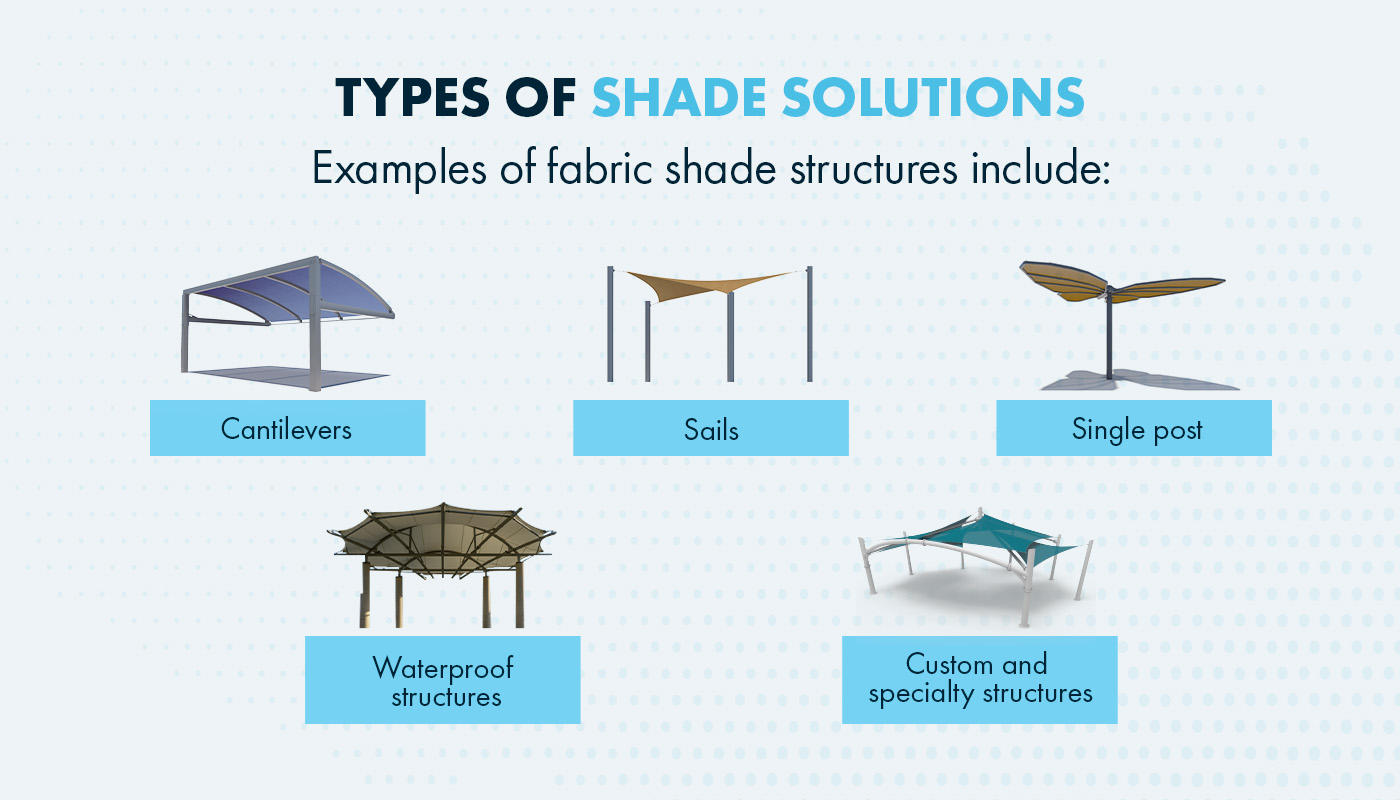
Examples of fabric shade structures include:
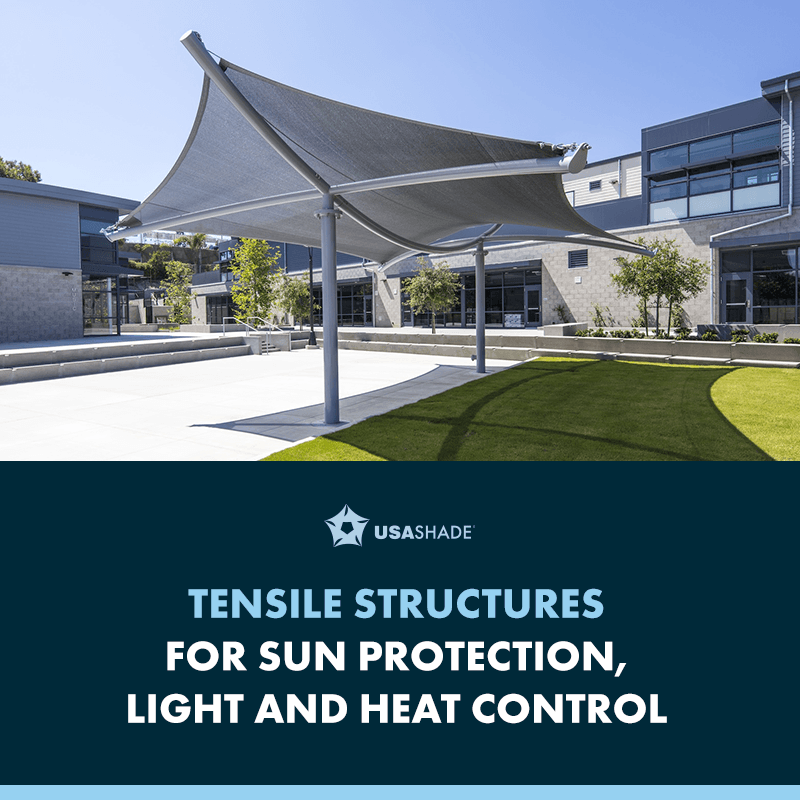
- Cantilevers: By using offset posts on one side of the structure, cantilevers provide users with completely unobstructed shade.
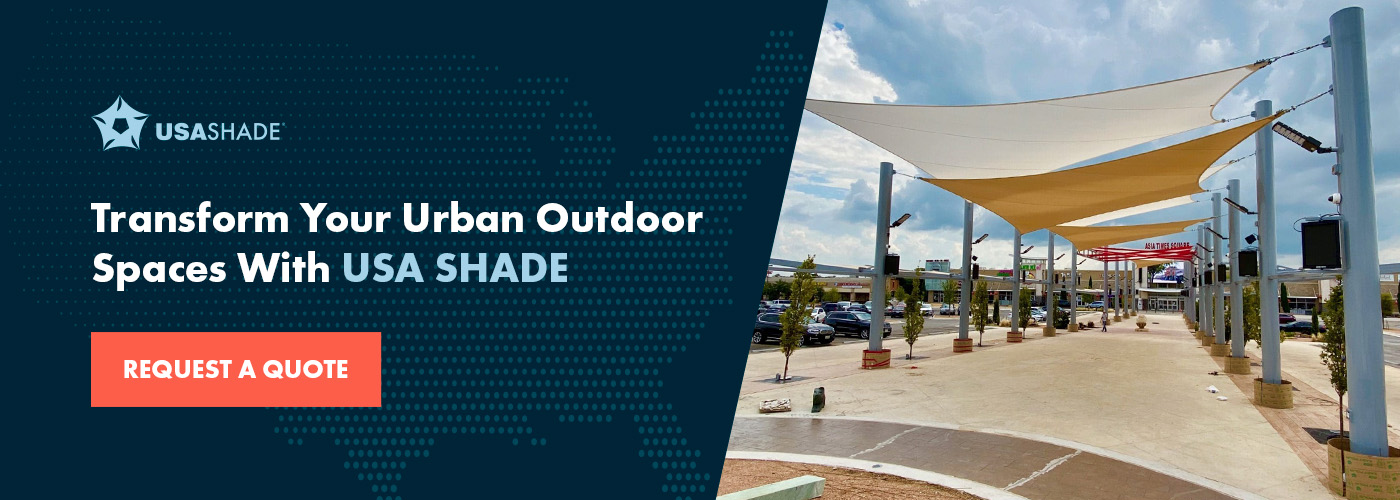
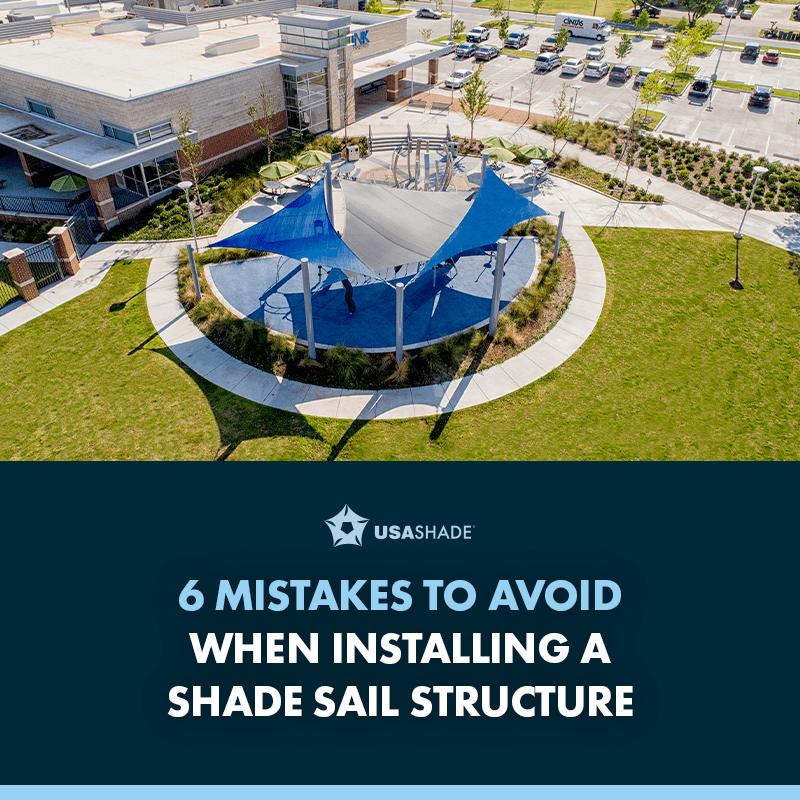
- Sails: Created using tensioned fabric, sails typically feature rectangular or triangular fabric stretched between multiple poles or anchor points.
- Single post: Single post shade systems are canopy shelters available in an array of shapes, including butterfly, multipoint umbrellas, circles, flowers and more.
- Waterproof structures: Waterproof shade structures provide year-round protection in various weather conditions, ensuring versatility.
- Custom and specialty structures: Urban architects aren’t tied to ready-to-install shade options — many service providers offer fully customizable and specialty shade solutions to perfectly suit your business’s unique outdoor spaces and fulfill your vision.
Factors to Consider When Choosing Shade Structures
Though they all provide protection from the sun, different shade structures have various features to consider when choosing the right one for your space.
- Space and footprint: Urban environments are often crowded. If you need a structure with minimal obstructions and maximized ground space, consider a cantilever or single-post system.
- Budget: Depending on your budget, consider investing in a high-quality, durable option, as opposed to a structure that’s cheaper initially but may have hidden long-term costs.
- Timeline: Some artificial shade structures take longer to install than others. Consider your project timeline and whether you need quick solutions.
- Climate and durability: Some canopies are more suited to specific climates, while others are versatile enough to use in almost any urban location. If you need a structure that can withstand both sun and rain, consider choosing a waterproof shade structure for longevity. Equally, areas that experience extreme heat or high vandalism rates could benefit from structures with fire-resistant fabric.
- Visual appeal: Shade structures come in a variety of colors, shapes and sizes. Consider designing a structure that complements its surroundings, be it a park’s design, a playground’s colors or your city’s skyline.
Trends in City Shading
Shade structures have always been an integral element of urban design. Consider these trends when choosing your business’s next shade structure:
- Shift toward infrastructure: Shade structures are no longer considered an optional benefit — they’re an integral part of urban infrastructure and a proactive tool for public health.
- Bright and bold colors: Many architects and urban planning committees are shifting away from neutral colorways and instead using shade structures to add vibrancy into concrete-heavy cityscapes.
- Multi-use spaces: There’s an increasing focus on strategically placing shade structures to maximize their functionality, including covering areas that serve multiple purposes.
- Data-driven design: Architects are using advancing technologies, such as 3D digital modeling and artificial intelligence, to maximize the effectiveness of shade structures.