

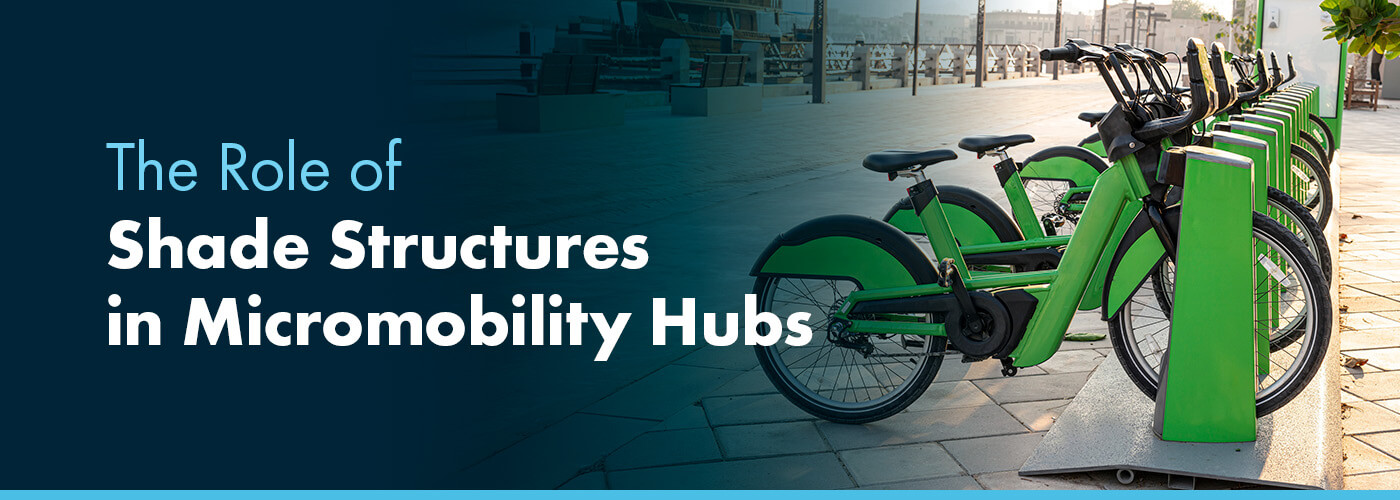
Expanding micromobility infrastructure makes cities more livable, giving people of all ages and socioeconomic statuses access to transportation. According to a report from the National Association of City Transportation Officials, people used shared micromobility vehicles 133 million times in America in 2023. U.S. micromobility trips increased by 16% from 2022 to 2023 as access to e-bikes increased in urban areas.
Though micromobility hubs are valuable, they can be challenging to protect from weather-related damage. Riders must feel comfortable and confident enough to engage with micromobility programs. City officials looking to improve these programs can implement shade structures to reduce heat damage problems and make micromobility spaces more inviting for riders.
What Is Micromobility?
The term “micromobility” encompasses transportation like e-bikes and e-scooters. It usually refers to vehicles that are smaller than traditional cars, run on electric batteries and enable users to easily get around urban areas.
While many cities have public transportation systems and coverage from ride-sharing companies like Uber, these options aren’t a fit for everyone. For example, a young professional who prefers not to own a car can save a valuable percentage of their paycheck by riding an e-bike from their apartment to a charging station near work.
Older adults can enjoy biking around their cities without the hassles of vehicle maintenance, while locals and tourists can use micromobility programs to fulfill needs as diverse as grocery shopping, attending doctor’s appointments, commuting to work or window shopping downtown in a new city.
While most European and Asian cities are walkable and bikeable, many American cities expanded after the automobile became popular in the early 1900s. Micromobility programs reverse-engineer accessibility in American urban centers by weaving e-bikes and e-scooters into civic infrastructure.
Enhancing Urban Mobility With Integrated Shade
Over time, heat and UV rays can damage the vehicles and charging stations, reducing ROI for a micromobility program. Micromobility programs need clean, well-lit, strategically located hubs to successfully support urban transportation and encourage people to use the equipment. Keeping hubs shaded also creates a more comfortable environment for would-be riders.
Learn more about the role of shade structures in micromobility hubs!
Protecting Your Fleet From Environmental Damage
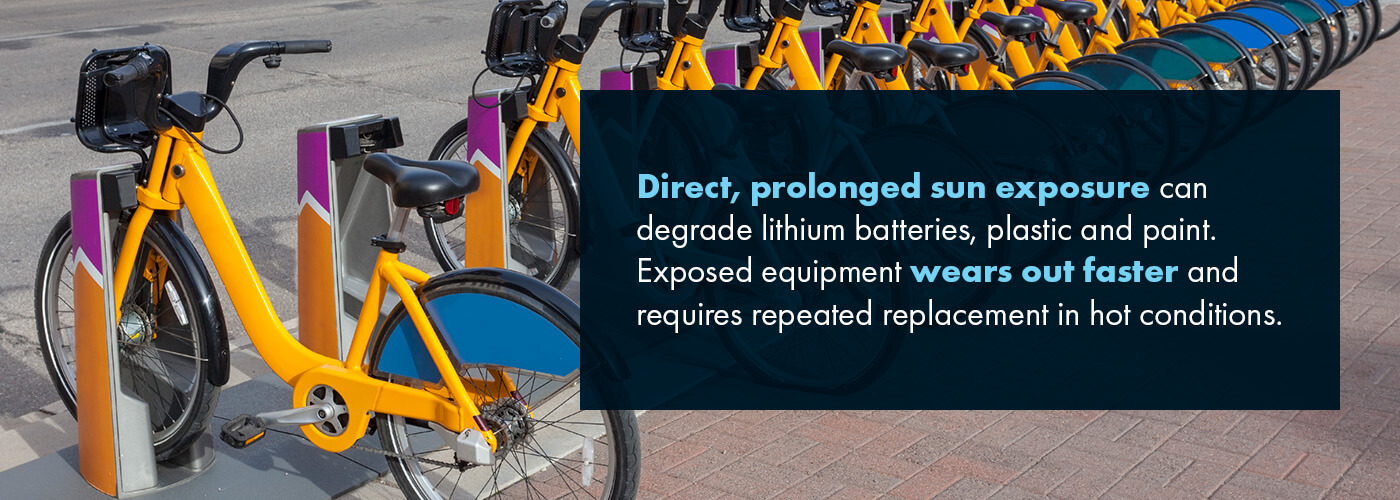
Protecting your equipment is one of the primary benefits of integrated shade structures for micromobility hubs. Direct, prolonged sun exposure can degrade lithium batteries, plastic and paint. Exposed equipment wears out faster and requires repeated replacement in hot conditions.
Save costs and prevent premature breakdowns by proactively installing shade structures over micromobility hubs. High-quality shade structures can last years, keeping weather off equipment and contributing to your micromobility program’s success.
Preserving Battery Life and Performance
Excessive concrete and asphalt transform cities into “heat islands” during the summer. Unfortunately, exposing EV batteries to heat for a prolonged period can reduce their functional life. Charging EV batteries in the heat also accelerates aging, necessitating frequent substitutions.
The best solution for this problem is to keep e-bikes and EV chargers in the shade. Though ambient summer temperatures can still reach triple digits, protecting lithium batteries from the worst of the heat damage will their useful life. Shade solutions like trees and permanent fabric installations effectively reduce costs for micromobility lithium batteries.
Preventing Cosmetic and Structural Damage
Heat isn’t the only threat to micromobility equipment — accompanying UV rays will damage plastic, paint and other materials. On a molecular level, UV rays generate extra energy on a material’s surface. This energy creates free radicals, which are unstable atoms with unpaired electrons. When exposed to oxygen, free radicals interact with surface molecules to make chemical changes.
Unfortunately, these changes make plastic weak and brittle, fade colorful finishes and generally damage equipment. Just like UV rays can harm your skin through a sunburn, they also have the power to break down plastic and other materials with enough exposure. UV-blocking shade structures are the most effective way to protect micromobility equipment.
Improving the User Experience at Micromobility Stations
Increased participation in your micromobility program is another benefit of permanent shade structures. Since the initiative should empower residents and tourists to explore more of the city, user experience is paramount. Micromobility programs have intentionally low participation barriers, attracting people across a broad spectrum.
Shade structures shield equipment and humans from excess heat during the summer. If you invest in waterproof fabric, shade structures can also block rain and temporarily shelter on-the-go people. Permanent shade structures create a space where pedestrians feel welcome and safe.
Increasing Rider Comfort and Dwell Time
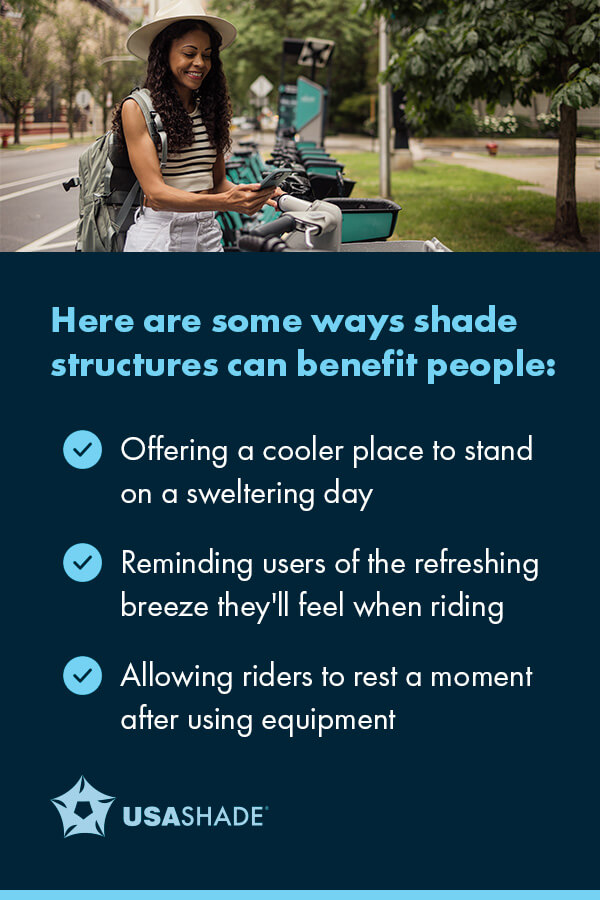
Shaded hubs increase rider comfort and encourage people to stay and learn more about the program. Here are some ways shade structures can benefit people.
- Offering a cooler place to stand on a sweltering day
- Reminding users of the refreshing breeze they’ll feel when riding
- Allowing riders to rest a moment after using equipment
Even if they don’t use the e-bikes or scooters, people will walk away with a positive impression of the program because it’s already benefited them by providing shade in the heat of the day.
Boosting Ridership and Accessibility
Bike share shade solutions can boost ridership by making it possible for more people to enjoy a micromobility program. Consider the difference between a shaded equipment hub versus one that’s been in the hot sun for hours. Without shade, equipment may be too hot to touch or use. It will also break down sooner, increasing maintenance costs.
Heat-damaged equipment may be less reliable, causing a lack of confidence in the program. Users will be less likely to try riding e-bikes or e-scooters for the first time if they worry about accidentally injuring themselves. Scooter share shade solutions increase accessibility and allow users to fully enjoy your micromobility program, regardless of weather conditions.
Design Considerations for Shaded Micromobility Hubs
Shaded hubs can benefit every micromobility program. However, your area’s unique variables should influence your local hub designs. Developing the ideal shade solution requires careful planning informed by an understanding of each hub’s environment. Factors like sun position, local weather patterns and hub size all affect effectiveness.

Size of the Shade Structure
Determining the size of shade structures for bike share stations depends on objectives like these:
- Protect charging stations from excess heat
- Provide shade for passersby
- Cover tourists from rain as they explore your city
Your shade structure can be smaller if covering the charging equipment is its primary purpose. Of course, it will need to block the sun from hitting equipment throughout the day.
Shade structures for scooter share stations and e-bikes can feature waterproof fabric to resist rain, providing cover during bad weather. A larger shade structure can become an all-season gathering space where people can learn how the hub works, which may inspire them to use it someday.
Integrating With Urban Aesthetics
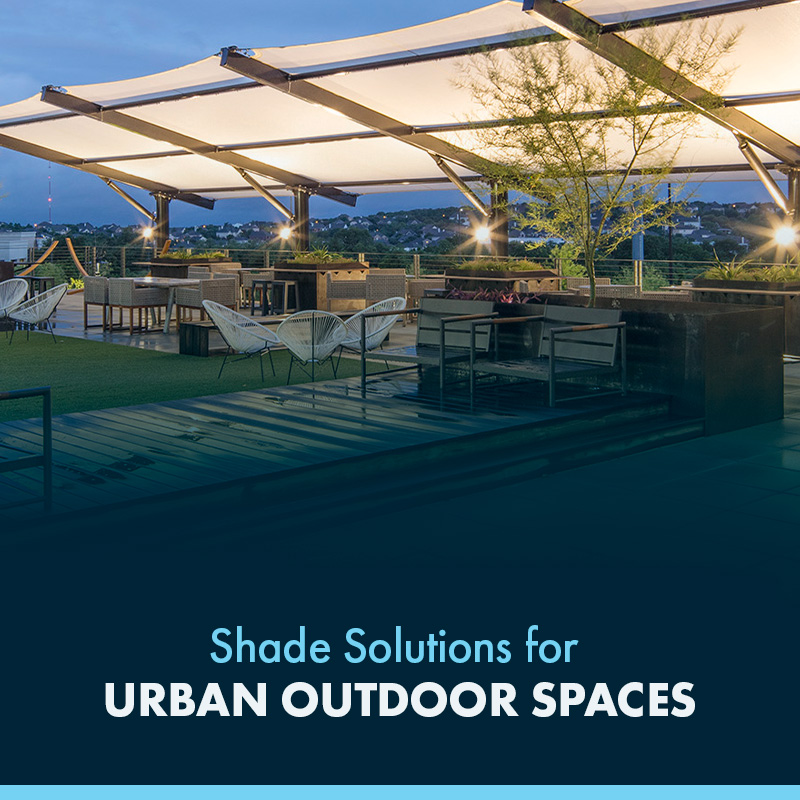
Modern shade structures can add an architectural element to your location. In addition to providing shade, they offer a striking or memorable visual that turns the hub into a landmark. Shade structures can resemble a specific shape or incorporate angles for an aesthetically pleasing visual.
Though shade structures are practical, they can also have a personality. Imagine a butterfly-shaped canopy adding whimsy to a playground or a sleek geometric design making an urban street corner feel impressively modern. Whether playful or refined, the shape, fabric color and steel finishes combine to create the desired atmosphere.
High ceilings can make a hub feel open and airy, while lower profiles offer a cozy, intimate vibe. Partnering with a custom shade provider gives you the flexibility to match form with function and tailor every detail to your community’s needs.
Durability for Public Spaces
Permanent shade structures must adhere to local building codes. For instance, some cities regulate wind load to ensure structures are safe for people to walk under, regardless of the weather. Working with a professional company can help you follow local codes and ensure compliance with your micromobility hub cover.
Shade structures must stand up to the elements, and material selection should reflect your local climate. UV-resistant fabrics are nonnegotiable in hot, sunny cities. In rain-prone areas, water-resistant options offer reliable performance and long-term durability.
Color matters, too. High-quality fabrics resist fading, so your shade structure stays vibrant even under intense sun. If longevity is a priority, check customer reviews to see how well a company’s materials hold up and whether their clients remain satisfied for years.
Why Not Just Plant Trees?
Trees create shade, nurture wildlife, purify the air and bring undeniable beauty to urban spaces. However, they fall short of protecting micromobility equipment. Trees require ongoing maintenance such as pruning, leaf cleanup and pest control. They can interfere with power lines, damage parked vehicles, and lose their canopy in winter — leaving bikes and scooters exposed.
Permanent shade structures offer year-round, low-maintenance coverage for cities focused on long-term sustainability and cost-effective infrastructure. They don’t shed leaves or drop branches, and their fabric can last years before needing replacement. They provide consistent protection in every season, extending equipment life and encouraging more people to ride.
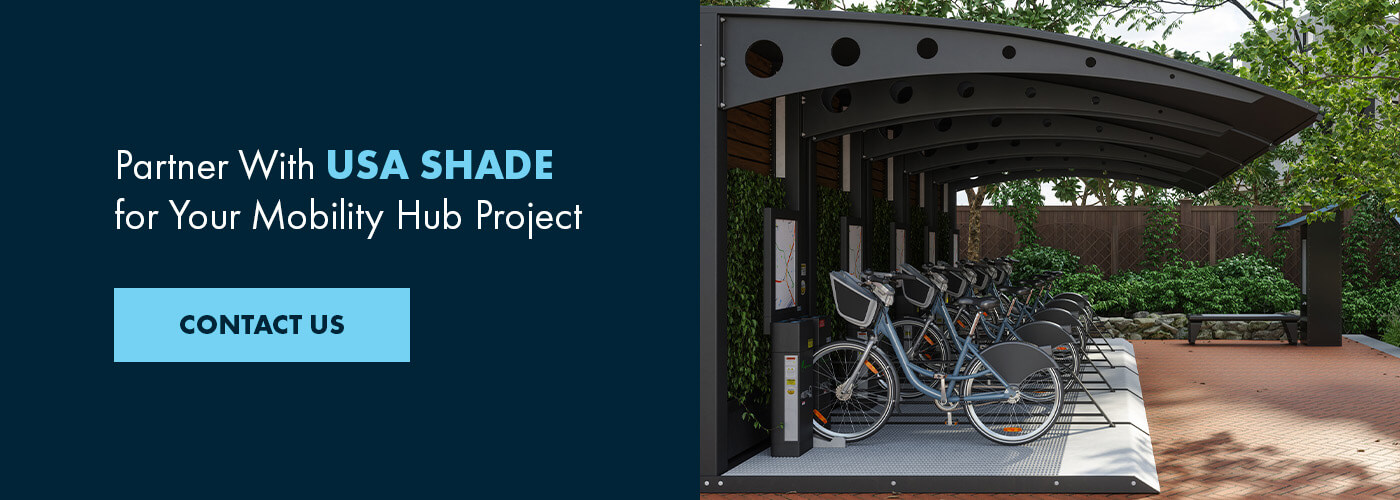
Partner With USA SHADE for Your Mobility Hub Project
USA SHADE is a leader in designing and manufacturing commercial-grade shade solutions. Our professional team works with clients in several states, tailoring each project to fit unique goals. All our products are durable, high-quality and aesthetically pleasing.
We support you from the design phase to construction, turning your shaded micromobility hub from a dream into reality. When you work with us, you’ll benefit from proactive communication, professional advice and a finished product that exceeds your expectations. Contact us today to request a custom quote for your project!